


Why traditional SKOs fall short
Sales Kick-Offs (SKOs) have long been a staple of commercial organizations. You’ll energize your sales teams, unveil strategies, and set targets for the year ahead. But while Sales often takes center stage, other revenue-critical teams (Marketing, Customer Success, Revenue Operations) are frequently left on the sidelines. They’re invited late, or not at all.
Today, this siloed approach isn’t fit for purpose.
Revenue generation is no longer the sole responsibility of Sales. It’s the outcome of coordinated efforts across the entire customer lifecycle. When SKO planning excludes key departments? You get:
- Fragmented messaging.
- Misaligned goals.
- Teams ill-equipped to deliver on the promises made at the event.
From SKO to RKO: A strategic evolution
Progressive organizations are shifting from SKOs to Revenue Kick-Offs (RKOs). These are inclusive, go-to-market events that bring together every team that influences revenue: Sales, Marketing, Customer Success, RevOps, Product, and Support.
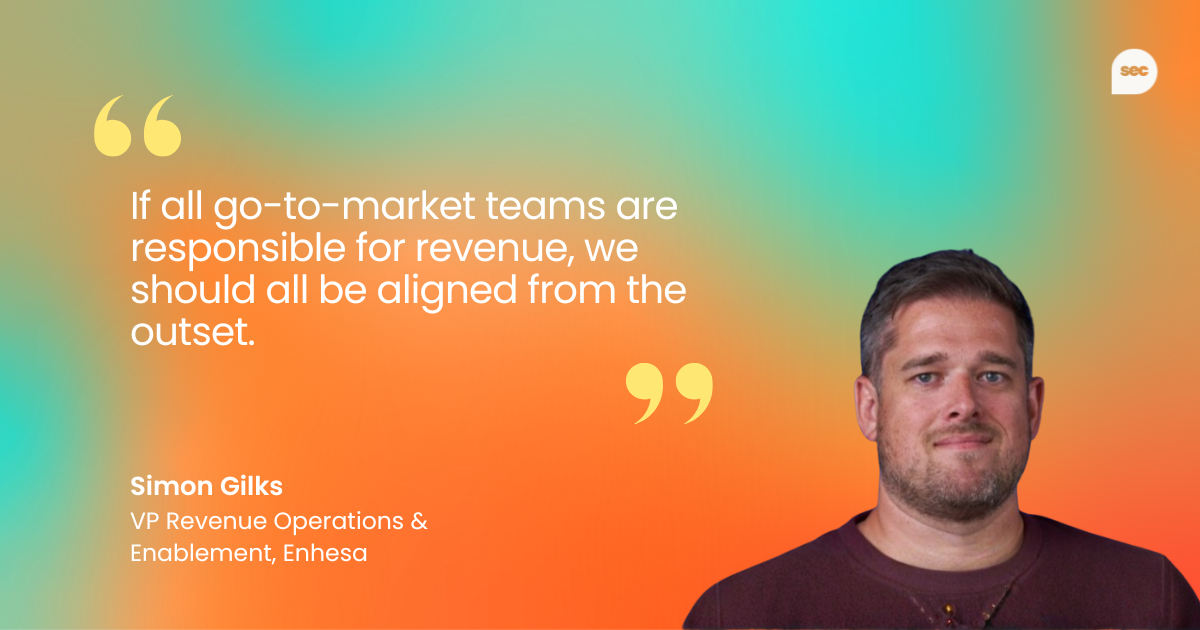
The rationale is simple: if we’re all responsible for revenue, we should all be aligned from the outset.
Unlike traditional SKOs that focus narrowly on sales tactics and quotas, RKOs align all revenue-driving teams under a unified strategy. They’re not just about motivating Sales for Q1, they’re about creating clarity, consistency, and cohesion across the entire customer journey.
The cost of siloed planning
When SKO planning begins in isolation, several issues tend to arise:
- Non-sales teams feel like an afterthought.
- Messaging and objectives become inconsistent across departments.
- Post-event execution falters due to lack of preparation and alignment.
In short, for your go-to-market function as a whole, a sales-only SKO can create more confusion than cohesion.
The lesson: Start cross-functional, stay cross-functional
Here’s the hard-earned lesson from years in RevOps and Enablement: if you begin SKO planning with a sales-only mindset, you won’t achieve true alignment by the end. Retrofitting collaboration late in the process is like trying to add eggs to a cake after it’s baked. It simply doesn’t work.
Instead, embed cross-functional collaboration from the very beginning. Your planning committee should include leaders from Sales, Marketing, Customer Success, and RevOps at a minimum. This sets the tone that the event belongs to everyone.
Early collaboration surfaces critical conversations that might otherwise be missed. Sales may propose a bold new pitch, but Marketing can flag if it’s misaligned with market insights. Customer Success might advocate for onboarding improvements that directly impact retention. These discussions ensure your kick-off reflects a comprehensive go-to-market strategy, not just a sales plan with a few add-ons.
Designing a unified, inclusive revenue kick-off
Here’s a full plan for building a Revenue Kick-Off that drives alignment and action:
Getting buy-in from other departments
Cross-functional planning is essential, but how do you bring other departments on board?
- Frame the RKO as a shared win: Don’t ask Marketing or CS to “support a sales event.” Position the kick-off as a strategic alignment initiative that benefits everyone. Highlight how it helps them achieve their own goals.
- Give real ownership: Involve other departments in planning and delivery. When they own a session or outcome, they’re more likely to commit resources and energy.
- Leverage executive influence: A message from the CEO or CRO that “this is a kick-off for all of us” can shift perceptions and priorities across the organization.
Conclusion: One team, one mission, one kick-off
To drive sustainable growth in 2026 and beyond, we must break down silos and treat the kick-off as a revenue team event from the very start.
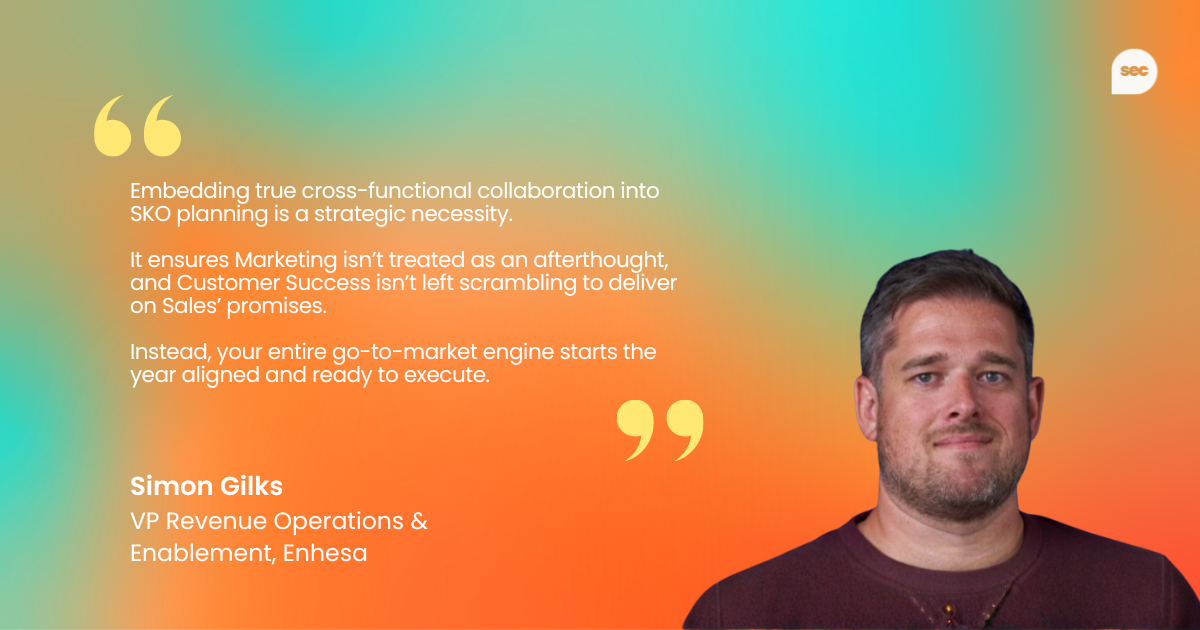
Embedding true cross-functional collaboration into SKO planning is a strategic necessity. It ensures Marketing isn’t treated as an afterthought, and Customer Success isn’t left scrambling to deliver on Sales’ promises. Instead, your entire go-to-market engine starts the year aligned and ready to execute.
So as you plan your 2026 kick-off, remember: the earlier and deeper you involve your cross-functional partners, the stronger your execution will be.
One team. One mission. One kick-off. That’s how you’ll succeed.


Sales enablement insider
Thank you for subscribing
Level up your sales enablement career & network with sales enablement experts
An email has been successfully sent to confirm your subscription.
 Follow us on LinkedIn
Sales enablement insider
Thank you for subscribing
Level up your sales enablement career & network with sales enablement experts
An email has been successfully sent to confirm your subscription.



.svg)
