


How can learning and development transform your sales enablement efforts from good to truly exceptional?
That’s a question I’ve been passionate about throughout my career in sales enablement – a journey that’s seen this function evolve from being a back-office support role into a strategic hub driving sales excellence and revenue growth.
At the core of that evolution is one critical element: learning and development.
So in this article, I want to share why L&D is more than just training – it’s a continuous, behavior-changing journey that fuels sales success. I’ll walk you through how reframing enablement with proven adult learning principles, experiential methods, and effective stakeholder engagement can help you maximize impact in your teams.
Let’s dive in!
Why learning and development matters in sales enablement
I remember my early days in sales support fondly – I was the analyst who loved spreadsheets, diving deep into sales compensation, financial planning, and analytics. Over time, I shifted back to sales effectiveness, and eventually into enablement leadership roles in finance, tech, and private industries.
What’s stayed constant? The undeniable fact that enablement is about empowering sellers not just with tools or content, but with ongoing learning.
And here’s a truth that’s shaped me: enablement isn’t just a function; it’s a trusted advisor role. We’re the hub in the wheel, guiding the sales organization – not by doing their work for them, but by providing direction, resources, and continuous support.
Sales excellence is the outcome we chase every day – and learning and development is the engine driving it.
 Ryan Joswick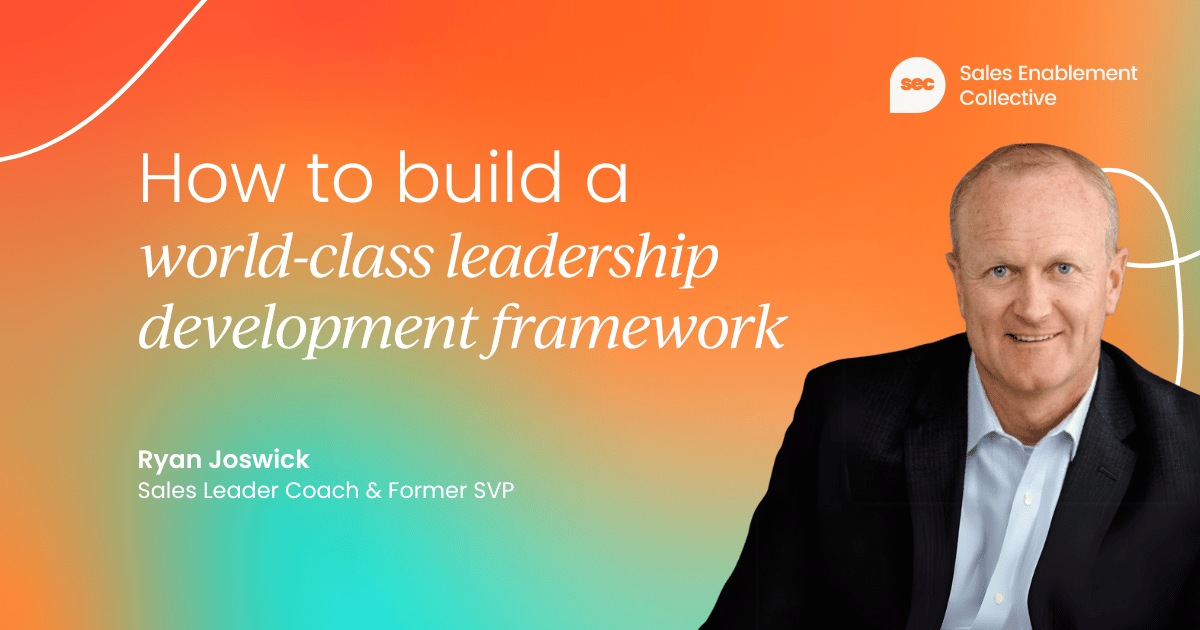
Reframing sales training to learning and development
Many people – myself included, early on – confuse training with learning and development. But they’re not the same thing. Training is a finite event. Think onboarding sessions where you cram new hires with information over a few days or weeks. You teach, they listen, then they move on.
Learning and development, on the other hand, is ongoing. It’s about changing behavior, not just imparting knowledge. I use the term “everboarding” to describe it – because enablement is a continuous journey. Markets change, customer needs evolve, and our sellers must adapt in real time.
There’s a science behind what looks like art. It’s not just about being a charismatic trainer or creating flashy content – it’s about applying adult learning theory and neuroscience to create programs that stick. This shift from a one-time event to a continuous program is what turns enablement into a growth engine.
 Lidia Arshavsky
Adult learning principles: Making enablement effective for sellers
Adult learning, or andragogy, is a fascinating area I’ve studied closely. I actually went back to school to get certified in adult learning theory because I wanted to understand why some enablement sticks and some doesn’t.
Here’s the gist of what I learned – and what I encourage you to apply:
- Intrinsic motivation is king. Sellers need to know, “What’s in it for me?” If they don’t care, they won’t engage.
- Acknowledge experience. Adults come with a wealth of experience. Don’t treat sellers like blank slates. Build on what they already know.
- Get them involved. Make learning interactive. Co-create content with sellers and cross-functional teams so it’s relevant and resonates.
- Tailor learning paths. Not every seller starts at the same level. Some need basics, others need advanced strategies. Allow for different “flavors” of learning.
- Immediate application. Adults want to apply what they learn right away. Connect enablement to real use cases and role plays.
I made the mistake early in my career of assuming I could just “tell” sellers everything they needed. That didn’t go well. Sellers saw me as an outsider teaching stuff that didn’t fit their day-to-day reality.
So, spend time with your sales teams. Get on calls with them. Learn their pain points. It’s eye-opening and essential.
 Lynnette Alagon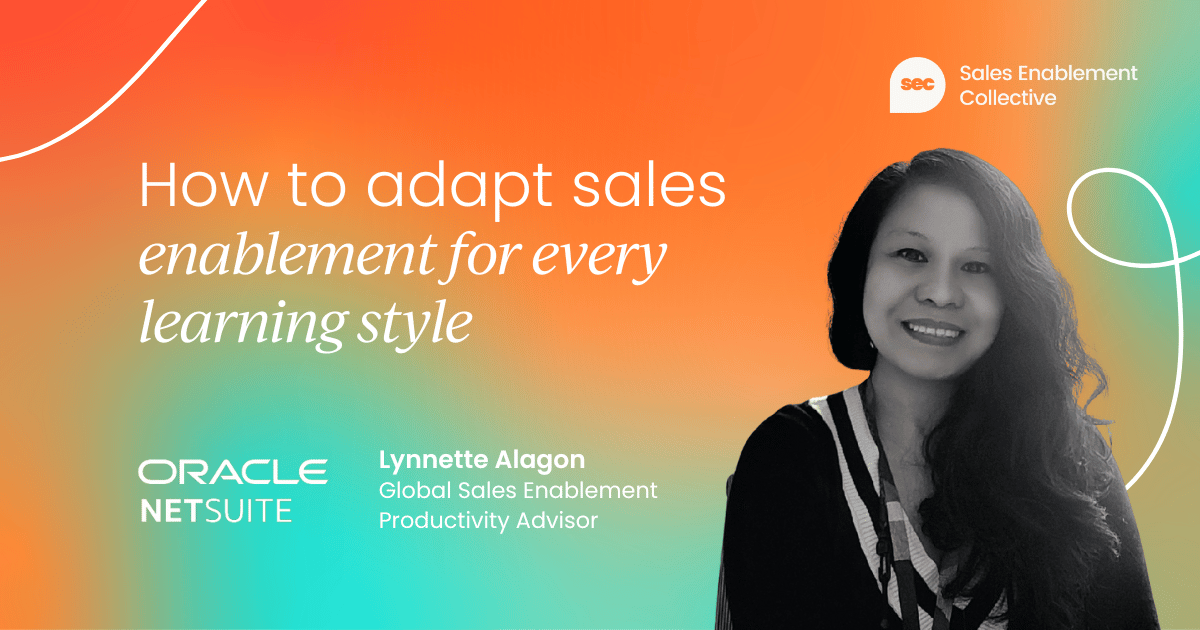


Sales enablement insider
Thank you for subscribing
Level up your sales enablement career & network with sales enablement experts
An email has been successfully sent to confirm your subscription.
 Follow us on LinkedIn
Sales enablement insider
Thank you for subscribing
Level up your sales enablement career & network with sales enablement experts
An email has been successfully sent to confirm your subscription.


.svg)
