


Last quarter, we rolled out two new tools, launched campaign tracking, updated our comp plan, and shifted our messaging — all in just eight weeks. If that sounds familiar, you might also be on a speedboat—racing through wave after wave of change. It's fast, relentless, and a little chaotic. Hopefully, this article helps calm the waters or at least bring a moment of clarity.
The pace of change can be so fast that teams either struggle to keep up or aren’t even aware a change has happened. That’s where sales enablement plays a critical role — not just in training, but in managing change effectively.
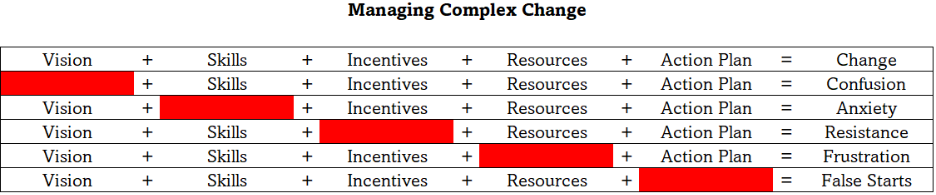
A while back, I came across a simple diagram that captured the essence of change management. It outlined five key pillars. Think of them like the legs of a table. If one is missing, the table might wobble. If two or more are missing, it collapses. And when you're trying to drive adoption across a team of ten or more, you need all five to ensure stability and success.
Let’s break them down.
Vision: Start with the Why
Vision provides clarity. It answers why the change is happening and what success looks like. Too often, we focus on the what and how — the new tool, the new workflow — without explaining the why. And without that, teams won’t buy in.
Here’s an example of a strong vision statement:
When you lead with a clear vision, your enablement session becomes more than just another training. It becomes a strategic initiative that supports sellers throughout the sales cycle.
Skills: Build Confidence Through Repetition
Change only sticks when people have the skills to execute it. That means training, coaching, and repetition. In adult learning, repetition is key. Even after multiple sessions, hands-on practice, and quizzes, some team members may still struggle. That’s normal.
To truly embed a new skill, it needs to be repeated until it becomes habit. And we know it takes time — anywhere from 21 to 66 days — to form a new habit. So plan for ongoing reinforcement, not just a one-and-done session.
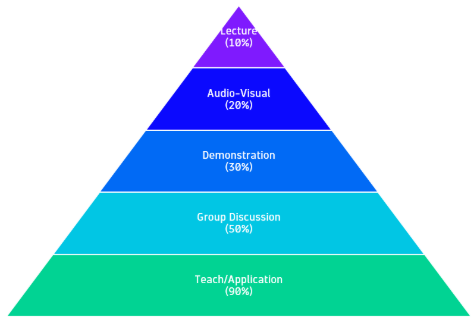
Another important factor in building skills is how the learning is delivered. The Learning Pyramid shows us that passive methods like lectures and reading lead to low retention, while active approaches — like discussion, hands-on practice, and teaching others — significantly boost how well people absorb and apply knowledge.
That’s why I often co-facilitate enablement sessions with another team member. It makes the session more interactive and ensures there’s more than one subject-matter expert in the room. More importantly, it gives someone else the opportunity to coach and speak in front of the team — which is a powerful way to reinforce their own learning. The benefits go beyond knowledge transfer; it builds confidence, deepens expertise, and strengthens team collaboration.
 James Shaw
Incentives: Align Behavior with Outcomes
Compensation drives behavior. Sellers want to know how a new process or tool benefits them. If the change doesn’t help them hit quota faster or more efficiently, it’s going to be a tough sell.
Use SPIFFs, performance incentives, and align compensation structures to motivate adoption. Make it clear how the new way is better than the old way — not just for the business, but for the individual.
Build a comparative model that clearly shows the difference in earnings between the old and new plans. Don’t just rely on a single example — create a few scenarios that reflect typical seller profiles, and make sure the variables are consistent across each one. Use median or average figures rather than extremes, so the comparison feels fair and grounded. Sellers can tell when something’s being oversold or forced. Transparency builds trust, and trust drives adoption.
Resources: Equip, Don’t Just Inform
The lack of resources can be incredibly frustrating and takes a real toll on teams. Today, most BD and sales teams juggle between five to seven tools just to do their jobs effectively. But without proper access—or clear guidance on how to use these tools—teams end up stretched thin, wasting valuable time trying to figure things out on their own.
Picture this: a high-priority campaign wraps up, and SDRs are told to follow up with the leads. But what happened during the event? Who were the keynote speakers? What’s the right talk track? Don’t just point your teams in a direction—give them a map to navigate with confidence.
One of the most useful practices I’ve picked up from my manager is building a comprehensive resource pack for every rollout. This typically includes:
- A deck with talk tracks and objection handling
- Email templates and response guides
- Step-by-step walkthroughs
- Dashboards with clear performance metrics
- A one-pager cheat sheet for quick reference
But it doesn’t stop there. These packs shouldn’t be built from scratch every time. By standardizing templates and frameworks, you create scalable assets that can be quickly adapted for future initiatives. This saves time, ensures consistency across teams and regions, and makes enablement more agile.
You can’t over-enable — but under-preparing is a common pitfall. And when that happens, even the best change initiative can lose momentum before it starts.
Action Plan: Make It Trackable and Transparent
Strategy without a clear action plan often leads to false starts. And as the saying goes, “If we fail to plan, we plan to fail”—a phrase we've all heard countless times. But it still rings true. At a minimum, it should outline clear launch timelines, set expectations for the team, and most importantly, include a system for tracking performance over time.
Take field campaigns, for example. After an event like a summit, I don’t just hand off leads and hope for the best. I run a four-week performance review to keep momentum going and ensure we’re learning as we go. I look at:
- How many leads are actively in cadence?
- How many have converted into contacts or opportunities?
- What’s the total pipeline generated so far?
- What insights can we draw, and what actions should the team take next?
We often say we want to be data-driven, but too often we lack real visibility into where prospects are dropping off. When was the last time you ran a Closed Lost analysis? Are the dropdown options updated with the latest reasons prospects are giving? Is there a text field for elaboration, or do we simply know we lost to a competitor without understanding why?
Knowing your numbers inside and out is what enables a real action plan—one that’s grounded in data, not just gut instinct.
Final Thoughts
Rollouts are rarely easy, and the biggest hurdle is often a lack of buy-in. People are creatures of habit, and change means managing not just processes but emotions too. I won’t promise this framework will make change effortless, but it will help you understand how many legs your table has and how to keep it steady when pushback comes.


Sales enablement insider
Thank you for subscribing
Level up your sales enablement career & network with sales enablement experts
An email has been successfully sent to confirm your subscription.
 Follow us on LinkedIn
Sales enablement insider
Thank you for subscribing
Level up your sales enablement career & network with sales enablement experts
An email has been successfully sent to confirm your subscription.



.svg)
