


I'm Nada, and I look after sales enablement, partner enablement, and customer enablement for Pentaho, part of Hitachi Vantara. Over the past 25 years working with major organizations, I've implemented over 15 pieces of tech stack and retired over 20.
This experience has taught me something crucial: managing the ever-growing, ever-changing world of sales tech stacks requires a fundamentally different approach than most enablement leaders take.
The VUCA environment
We're operating in what's known as a VUCA world—one characterized by volatility, uncertainty, complexity, and ambiguity.
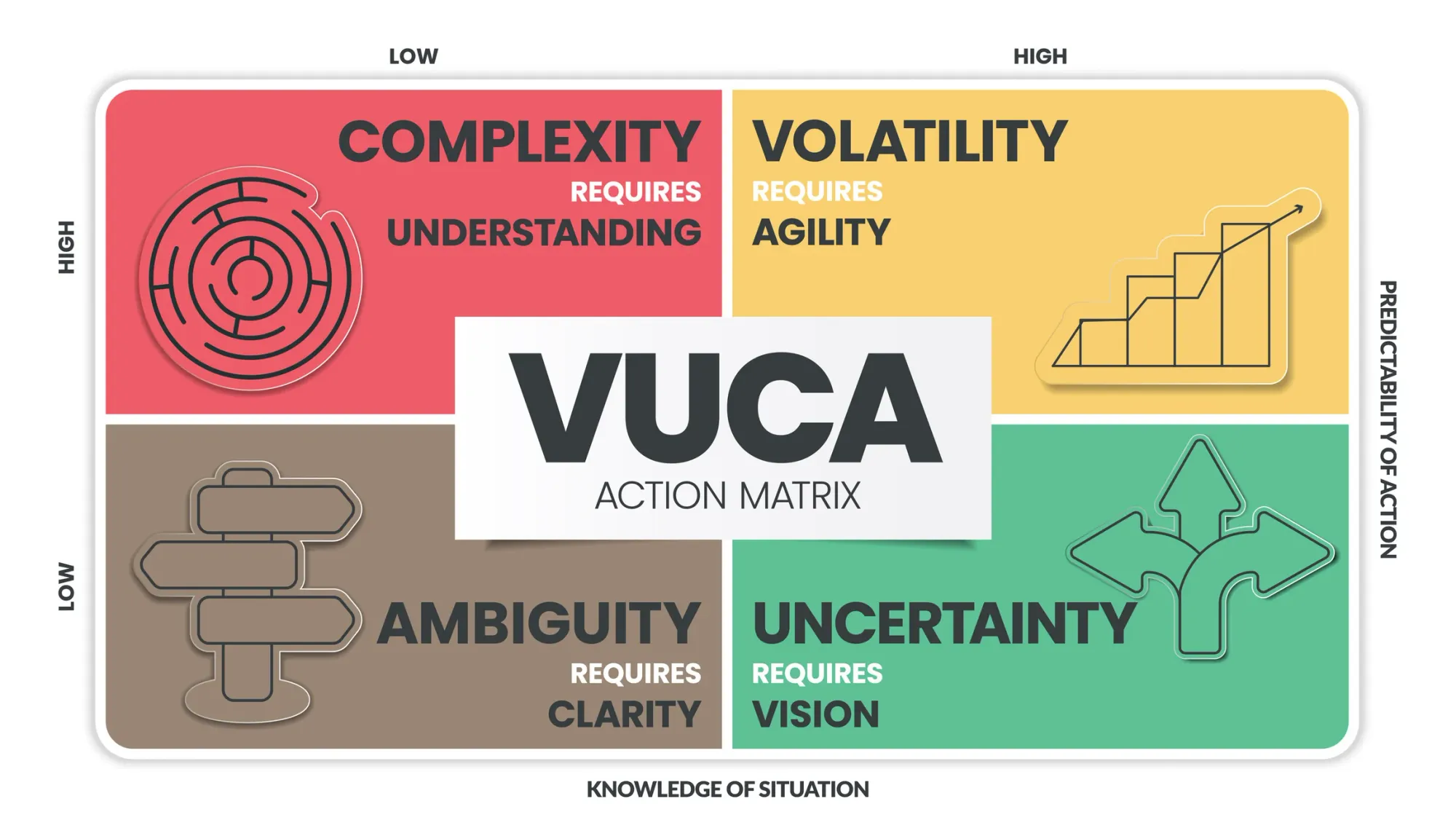
In this environment, agility isn't optional. The statistics bear this out: the average tenure of a CRO in organizations turning below $5 billion annually is just 18 months.
For those who've been in an organization for five years or more, this likely means working under two or three different CROs, each bringing their own strategy, direction, and preferences. This constant change inevitably influences decisions around tech stack adoption and retirement.
Sales enablement professionals often find themselves responsible for the tech stack whether they've formally accepted that responsibility or not. The landscape typically looks chaotic: multiple overlapping tools, some actively used, some abandoned, and some that nobody remembers purchasing or why.
The expectation is that sellers will work smoothly across 10, 15, or sometimes even 20 different platforms. Yet the reality rarely matches this expectation. Many organizations maintain extensive tech stacks that their sales teams don't consistently use.
Understanding your tech landscape
The fundamental question becomes, what am I actually trying to get my sellers to do? This isn't straightforward. Beyond the basics; perhaps Salesforce as a CRM and a sales methodology like Command of the Message, Sandler, or Challenger, the layers multiply quickly.
Consider the question: What handles forecasting? What about call listening and coaching? Where does content live, and how do we measure its effectiveness? Is this internal content for sellers or customer-facing materials? Who creates it? Who ensures compliance?
Working in data at Hitachi Vantara, where data storage, protection, and integrity are paramount, has reinforced an important truth about AI and GenAI: they're only as intelligent as the data they're fed.
There's always an opportunity to reassess how well the stack meets these criteria.


Sales enablement insider
Thank you for subscribing
Level up your sales enablement career & network with sales enablement experts
An email has been successfully sent to confirm your subscription.
 Follow us on LinkedIn
Sales enablement insider
Thank you for subscribing
Level up your sales enablement career & network with sales enablement experts
An email has been successfully sent to confirm your subscription.


.svg)
