

Have you ever stopped to think about whether your enablement strategy is truly driving revenue, or if it’s simply ticking boxes?
It’s easy to fall into the trap of focusing solely on training sessions, content delivery, or tool adoption – tasks that feel productive but may not ultimately move the needle on revenue growth.
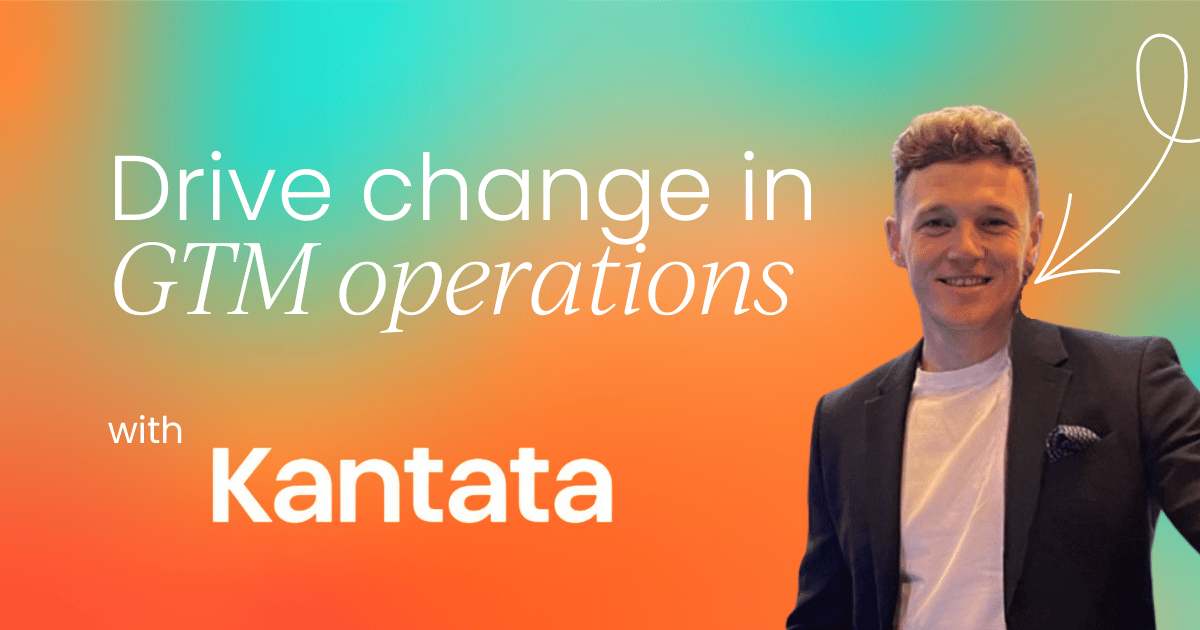
I’m Ben Jones, Director of Global Enablement at Kantata, and I’m here to tell you: enabling your teams shouldn’t be about checking off a list of “to-dos.” It should be about transforming the way your organization works together to drive business outcomes.
In this article, I’m going to share the lessons I’ve learned along the way, the frameworks that helped us at Kantata shift our approach, and the strategic changes that empowered us to not just support, but actively drive revenue across departments.
If you’re looking to elevate your enablement function and align it with your company's revenue goals, read on – you might just discover the missing link in your strategy.
Embracing change: From siloed to seamless enablement
In 2022, our company Kantata was born out of the merger between two companies, and as we merged our teams, we found ourselves caught between Tuckman’s stages of team development – forming, storming, norming, and performing.
You see, at that point, we were definitely in the “storming” phase. Things weren’t yet aligned, and as much as we wanted to be in “norming” and on our way to “performing,” we had to deal with fragmentation.
Our departments all operated with their own processes and content, but they were siloed, and we needed to fix it fast.
To complicate matters, our content and learning resources were scattered across multiple systems. This fragmentation wasn’t just inefficient – it made it hard to track progress, share insights, or deliver consistent experiences across teams.
As Gartner notes, the key challenge in this siloed environment is a lack of clear ownership of the entire customer journey. When ownership isn’t clear, it leads to inefficiencies and confusion. Our vision became clear: we needed to create a seamless GTM function, with all touchpoints connected and aligned to drive revenue.
We began to implement a unified approach to our processes and technology. Our aim was to establish one continuous thread that connected sales, customer success, marketing, and product teams, with a shared set of processes and tools.
The idea was simple: no more fragmented teams, no more disjointed tools – just one seamless experience across the entire customer lifecycle. Let me walk you through how we did it.
 Ella Harrison


Sales enablement insider
Thank you for subscribing
Level up your sales enablement career & network with sales enablement experts
An email has been successfully sent to confirm your subscription.
 Follow us on LinkedIn
Sales enablement insider
Thank you for subscribing
Level up your sales enablement career & network with sales enablement experts
An email has been successfully sent to confirm your subscription.


.svg)
