


Salespeople are a competitive, ambitious bunch, and so personality clashes are perhaps inevitable from time to time. While a little bit of tension and friendly competition can be positive motivators, if relationships and behaviors begin to deteriorate to a point where it becomes unhealthy for the team and impacts on employee wellbeing and performance, it needs to be confronted and addressed.
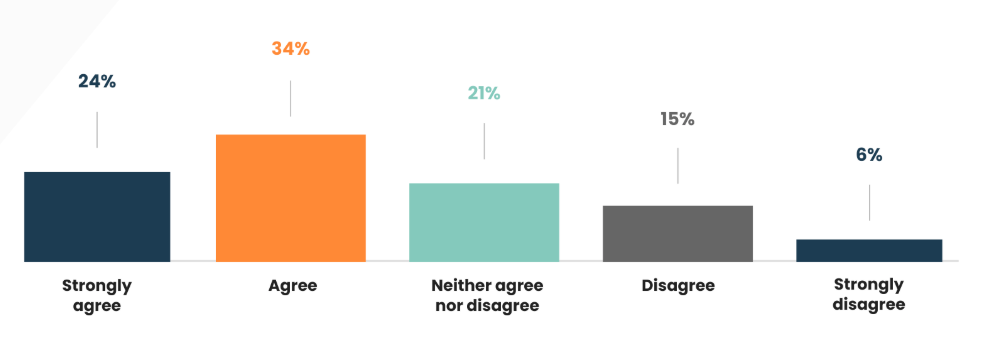
The good news? Strong communication really does work. In the SEC Gold Standard Prospecting Report, 58% of sales pros said their teams collaborate effectively - proof that open dialog resolves, and often prevents, most conflicts.
While sales enablement wouldn’t need to get directly involved with addressing this kind of conflict between reps, your job is to support sales teams to operate efficiently and overcome barriers - so it’s handy to be aware of the steps line managers need to take.
4 common types of sales team conflicts
Understanding the specific types of conflicts that arise in sales teams helps you address them more effectively. Each type requires a different approach, and recognizing the patterns early can prevent escalation.
1 - Ego clashes and competitive tensions
CPP's Global Human Capital Report found that clashing egos cause 49% of workplace conflicts. In sales, where individual achievement drives success, these personality clashes intensify.
In an industry where success relies heavily on reps using their charisma and personal credibility to build trust with customers, egos can easily be damaged, toes can be stepped on and wires can get crossed. Many problems like this arise when two people get off on the wrong foot because they aren't given the chance to really get to know each other. There's also a delicate balancing act in sales in how individuals prioritize personal goals with team objectives.
Imagine two reps: Helen and Nicola. What starts as jovial office banter escalates into more barbed, even confrontational, exchanges. You, their manager, and others in the office, began picking up on the negative vibes, which sometimes spilled over into meetings, creating a toxic atmosphere, sucking up energy and distracting from productive discussions.
The resolution? Their manager implemented a "wins sharing" session where both reps presented successful strategies to the team. This transformed competition into collaboration, with both contributing to a shared playbook.
2 - Differences in working style
Sales reps approach their work differently. Some thrive on detailed planning and CRM updates. Others excel through spontaneous client interactions and last-minute creativity.
When these work style conflicts clash, productivity suffers. A methodical rep paired with an impromptu partner on a major account can create friction over preparation levels, follow-up timing, and client communication approaches.
The key is establishing clear processes that accommodate both styles while maintaining standards. Set non-negotiable checkpoints (like CRM updates) but allow flexibility in how reps achieve them.
3 - Goal and territory conflicts
Unclear territory assignments and overlapping targets create unnecessary competition. When two reps believe they deserve credit for the same account, resentment builds quickly.
These sales team conflicts often stem from poor communication about account ownership, commission structures, or team versus individual goals. Without clear boundaries, even well-intentioned reps step on each other's toes.
4 - Resource competition
Limited resources spark workplace conflict when reps compete for marketing support, product demos, or leadership attention. High performers may monopolize resources, leaving others feeling unsupported.
This imbalance creates a divide between "favored" and "forgotten" team members, damaging team dynamics and collaboration. Fair resource allocation systems prevent these tensions from developing.

How to address active conflicts in your sales team
When conflict erupts between team members, swift action prevents lasting damage to relationships and performance. Here's your framework for intervention.
• Establish open communication immediately
Start by meeting with each party separately. Use these conversation starters:
- "I've noticed some tension. Help me understand your perspective."
- "What specific behaviors or situations are creating challenges for you?"
- "What would a positive resolution look like from your viewpoint?"
Document their responses without judgment. Focus on specific incidents rather than generalizations. This individual approach ensures everyone feels heard before group discussions begin.
It may be that Helen feels that Nicola is undermining her in front of colleagues, or that Nicola thinks Helen is stepping on her toes and trying to poach her customers. By making reps' individual responsibilities and accountabilities clear, you can remove any ambiguity and help to avoid conflict before it even begins.
• Implement structured mediation
Bring conflicting parties together only after individual sessions. Set ground rules:
- One person speaks at a time
- Focus on behaviors, not personalities
- No interrupting or defensive responses
- Commit to finding solutions, not assigning blame
Guide the conversation toward shared goals. Remind them of team targets and how collaboration impacts everyone's success. When emotions rise, return to facts and business impact.
A pragmatic solution could be to arrange for them to work closely together on a project with a shared goal. This may seem counterintuitive, but having reps depend on and invest in each other can create a bond of respect that wasn't there before, and a willingness to accept that it's in their interests to work together.
• Create actionable resolution plans
Move from discussion to commitment. Develop specific agreements:
- Clear behavioral expectations going forward
- Communication protocols for future disagreements
- Check-in schedules to monitor progress
- Consequences if agreements aren't honored
Document these commitments and have both parties sign off. Schedule follow-ups at one week, two weeks, and one month to ensure lasting change.
 Lidia Arshavsky
4 ways to build a conflict-resistant sales culture
Prevention beats intervention every time. Strong sales cultures minimize conflicts through proactive systems and clear expectations. Here are four ways to build one.
1 - Foster collaborative team dynamics
Shift from pure competition to "competitive collaboration." Implement team-based incentives alongside individual targets. When reps win together, they support each other's success.
Regular team building goes beyond trust falls. Try "deal debriefs" where reps analyze wins and losses together. Create "buddy systems" pairing experienced reps with newcomers. These connections build empathy and understanding before conflicts arise.
2 - Implement clear communication systems
Ambiguity breeds conflict. Establish these communication standards:
- Weekly one-on-ones between reps and managers
- Clear escalation paths for concerns
- Regular team meetings with structured agendas
- Anonymous feedback channels for sensitive issues
Document everything: territory assignments, commission structures, resource allocation rules. When everyone knows the rules, there's less room for misunderstanding.
3 - Align performance management
Conflicting KPIs create conflicting behaviors. Ensure your performance metrics encourage collaboration:
- Balance individual and team targets
- Reward knowledge sharing and mentoring
- Recognize collaborative wins publicly
- Address competitive behaviors that harm team cohesion
Review your compensation structure regularly. Does it inadvertently pit team members against each other? Adjust incentives to promote the behaviors you want.
4 - Invest in conflict resolution training
Don't wait for conflicts to teach resolution skills. Proactive training equips your team to handle disagreements professionally.
Focus training on:
- Active listening techniques
- Emotional intelligence development
- Negotiation skills for internal situations
- Stress management strategies
Make this training ongoing, not one-time. Monthly skill sessions keep concepts fresh and give reps practice in low-stakes environments.
This ebook unpacks proven sales plays that actually move revenue. Teams running dynamic coaching programs—a centerpiece of the guide—see 28% higher win rates (Sales Coaching 101 eBook, 2023). Grab it to sharpen your strategy and close more deals.
When to escalate: recognizing serious conflicts
Not all conflicts resolve through conversation. Recognizing when to involve HR protects your team and organization from liability.
• Clear escalation triggers
Escalate immediately when you observe:
- Threats of violence or aggressive physical contact
- Discriminatory language or harassment
- Deliberate sabotage of colleague's work
- Substance abuse affecting job performance
- Repeated violations after formal warnings
These behaviors cross from conflict into misconduct. Once this occurs, your role shifts from mediator to reporter and documenter.
• HR partnership protocols
Contact HR before taking action on serious conflicts. They'll guide you through:
- Proper documentation procedures
- Investigation requirements
- Interim measures to separate conflicting parties
- Legal considerations for your industry
- Communication guidelines during investigations
Never promise confidentiality you can't maintain. Some situations require mandatory reporting regardless of employee preferences.
• Documentation best practices
Start documenting at first signs of serious conflict:
- Date, time, and location of incidents
- Direct quotes when possible
- Names of witnesses
- Actions taken and employee responses
- Follow-up communications
Store documentation securely and share only with HR and senior leadership as directed. This record protects everyone involved and ensures fair resolution.
Remember: you're not judge or jury. Focus on gathering facts and following company procedures while HR handles formal investigations.
Leading sales and sales enablement means dealing with big personalities - which is usually a good thing as that means big results. Effective salespeople are confident, driven and assertive. One of the most satisfying parts of sales enablement's job is helping make sure these traits are channeled positively.
Ready to master conflict resolution and team dynamics?
Managing sales team conflicts requires advanced leadership skills. Pro+ membership gives you the tools and training to handle even the toughest team challenges:
- Expert-led workshops: Learn conflict resolution strategies from leaders at Google, LinkedIn, and IBM who've managed high-performing sales teams
- Practical templates: Access ready-to-use conflict resolution frameworks, team communication protocols, and performance management tools
- Real-world case studies: See how top sales enablement pros handle personality clashes, resource conflicts, and team dynamics
- Peer mentorship: Connect with experienced enablement leaders who've navigated similar challenges
- Continuous learning: Stay ahead with monthly workshops on leadership, team psychology, and performance optimization
Transform team conflicts into opportunities for growth.


Sales enablement insider
Thank you for subscribing
Level up your sales enablement career & network with sales enablement experts
An email has been successfully sent to confirm your subscription.
 Follow us on LinkedIn
Sales enablement insider
Thank you for subscribing
Level up your sales enablement career & network with sales enablement experts
An email has been successfully sent to confirm your subscription.


.svg)
