


All B2B sales leaders have had at least one quarter with strong activity levels that don’t translate into revenue.
The sales team is usually meeting activity KPIs, such as making a high volume of calls, booking meetings, and maintaining healthy pipeline coverage. However, a closer look at the deals data shows that many aren’t advancing towards close.
I have seen this pattern repeatedly across inside sales teams, particularly in enterprise businesses where sales cycles are longer and more complex.
Sales development reps (SDRs) hyper-focus on “doing” because it’s easy to measure. They assume that with enough activity, revenue will eventually follow. Sometimes it does. Often it does not.
Progress over activity in B2B sales
When I discuss sales activity, I mean the day-to-day inputs we can count, such as:
- Calls made
- Emails sent
- Meetings booked
- Demos delivered
- Opportunities created
- Pipeline coverage ratios
These metrics are necessary. Activity baselines matter because they show a minimum level of effort and outreach. Without outreach, nothing happens. But activity levels tell us that something was done. It does not tell you whether the buyer has progressed closer to being a won sale.
 Richard Bracchi
When I mention sales progress, I mean something different. Progress is visible in:
- Stage-to-stage conversion
- Reduced time in stages
- Call-to-conversation rates
- Clear next steps agreed with the buyer
- Commercial qualification depth
- Improved win rates
Real sales progress requires some kind of buyer validation. If the buyer has not taken a meaningful step forward, the opportunity has not progressed, no matter how many internal actions have been logged.
To put it simply, activity is seller-driven, while progress is buyer-validated.
Why high activity often fails
Sales leaders face a growing set of pressures. In a noisy digital world, SDRs can struggle to create quality conversations. On the marketing side, leads vary in standard, which only wastes sellers' time and generally, buyers are harder to reach. So, of course, the natural response is to increase volume. Make more calls. Send more emails. Book more meetings.
However, increasing activity doesn’t automatically improve the quality of engagement. In fact, it can dilute it.
 James Shaw
Tracking activity without real buyer engagement
I have reviewed pipelines where calls were plentiful, yet conversion from call to qualified opportunity was poor. Despite the team working hard and having lots of conversations, there was no commercial relevance.
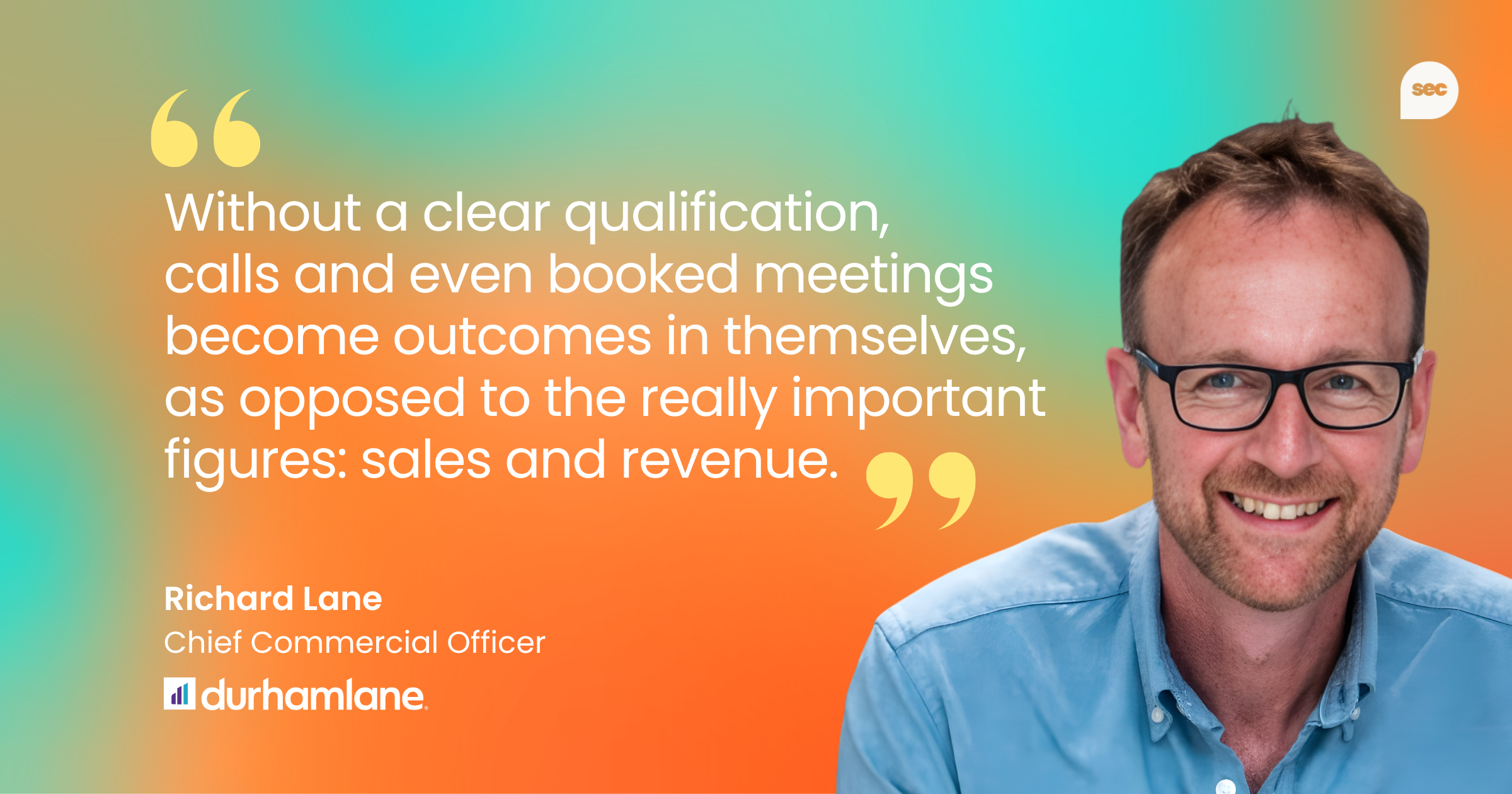
Without a clear qualification, calls and even booked meetings become outcomes in themselves, as opposed to the really important figures: sales and revenue.
Measuring pipeline volume without pipeline health
Another common pattern is inflated pipeline coverage masking weak conversion. Leaders might feel reassured by a 3x or 4x coverage ratio, but when they analyze:
- Stage aging
- Conversion rates between stages
- Opportunities with no clear next step
… they often find deals are stalled. The sweet spot is measuring both pipeline volume and health, in terms of how likely an opportunity is to close (based on actual data).
Falling into the performance management trap
It’s easier to performance-manage against activity. Leaders can ask for more calls and set higher meeting targets. These are controllable behaviors that give the illusion of improvement.
On the other hand, coaching commercial depth is hard. It requires us to inspect deals properly, challenge qualifications, and sometimes accept that the pipeline needs to reduce before it can improve.
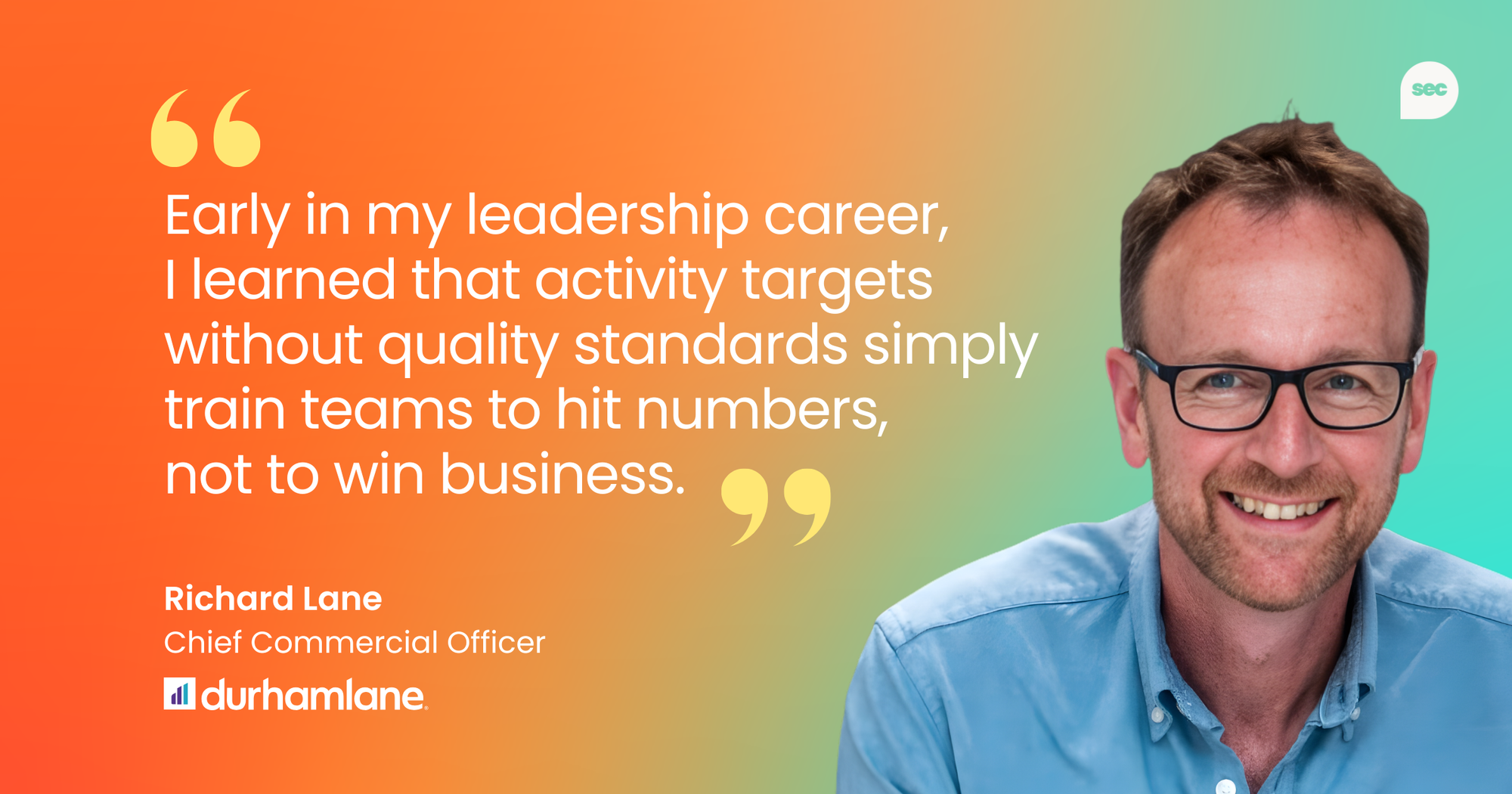
Early in my leadership career, I learned that activity targets without quality standards simply train teams to hit numbers, not to win business.
Costs of confusing activity with progress
Sales (and marketing) leaders are accountable for revenue efficiency, which means the costs of confusing activity with progress are significant.
If your team is busy but not advancing deals, your cost of sale increases. You are paying for effort that does not convert. Account executives spend time progressing poorly qualified opportunities, while SDRs book meetings that won’t move beyond the first conversation.
More people doing low-impact work does not improve revenue per head.
Often, pipeline stages reflect internal optimism rather than real buyer commitment, and this makes forecasting unreliable. Deals may appear active because there has been recent contact, but if there is no clear commercial validation, that activity should not be included in the forecast.
When the quarter-end comes, leaders either depend on intuition or fail to make forecasts at all.
Instead of prioritizing calls made, meetings booked, and opportunities created, sales leaders should place more emphasis on positive conversations per day, stage conversion rates, time in stage, qualification score, win rate, and revenue per rep relative to activity levels.
The importance of a qualification framework
The most practical way of moving from an activity focus to a progress focus is by implementing a structured qualification framework or methodology. This means creating clear, shared standards for what constitutes a qualified opportunity and what must be present before an opportunity or deal is lodged.
Without a qualification framework, SDRs book meetings without assessing commercial viability, AEs advance deals based purely on optimism, pipeline stages don't reflect buyer intent, and forecast confidence remains low.
With a qualification framework embedded into CRM stages and coaching routines, each stage has defined exit criteria, buyer commitment is required before progression, managers inspect qualification depth rather than just deal count, and forecast discussions are grounded in numbers and depth.
A qualification framework also forces more meaningful conversations, answering questions like:
- Is there an articulated problem with measurable impact?
- Is there budget alignment?
- Do we have access to decision-makers?
- Is there urgency tied to a business outcome?
- Has the buyer agreed to a defined next step?
Embed qualification into training, pipeline reviews and performance management. It isn’t enough to simply introduce a framework; it must be tracked and managed over time.
How sales leaders measure what actually matters
Great sales teams understand that activity tracking is necessary, but it is only the starting point. When we clearly distinguish between activity and progress, we improve revenue efficiency, forecast accuracy, seller capability, and pipeline health.
Remember: If the buyer hasn’t moved, the opportunity hasn’t progressed, no matter how many conversations have taken place. This principle has shaped how I inspect pipelines, coach managers, and define performance standards. Separating activity from progress is a must for sustainable business growth.


Sales enablement insider
Thank you for subscribing
Level up your sales enablement career & network with sales enablement experts
An email has been successfully sent to confirm your subscription.
 Follow us on LinkedIn
Sales enablement insider
Thank you for subscribing
Level up your sales enablement career & network with sales enablement experts
An email has been successfully sent to confirm your subscription.



.svg)
