












Once a month, ten friends, most of us exhausted dads of small children, descend upon my basement for a game of ultra-low-stakes poker.
We wager less than the cost of a single Starbucks latte, fueled by smoked meat from my Big Green Egg and the need for some adult conversation at the end of a long day.
Like some sort of suburban miracle, the game concludes promptly at 10 PM because, let’s be honest, it’s a school night and we all have 6 AM wake-up calls, wake-up calls that might involve tantrums or perhaps Paw Patrol.

While there is absolutely nothing formal about this game played on a collapsible table my kids found on Amazon, it’s surprisingly one of the best learning environments I’ve encountered.
As it turns out, navigating a low-stakes dad poker game has taught me a great deal about modern sales enablement and the digital-age workplace and over the months of pulled pork and poker in the basement, everyone around the table, slowly but surely, has become a better player - whether they recognize it or not.
Here are some lessons picked up along the way:
You don’t learn by folding
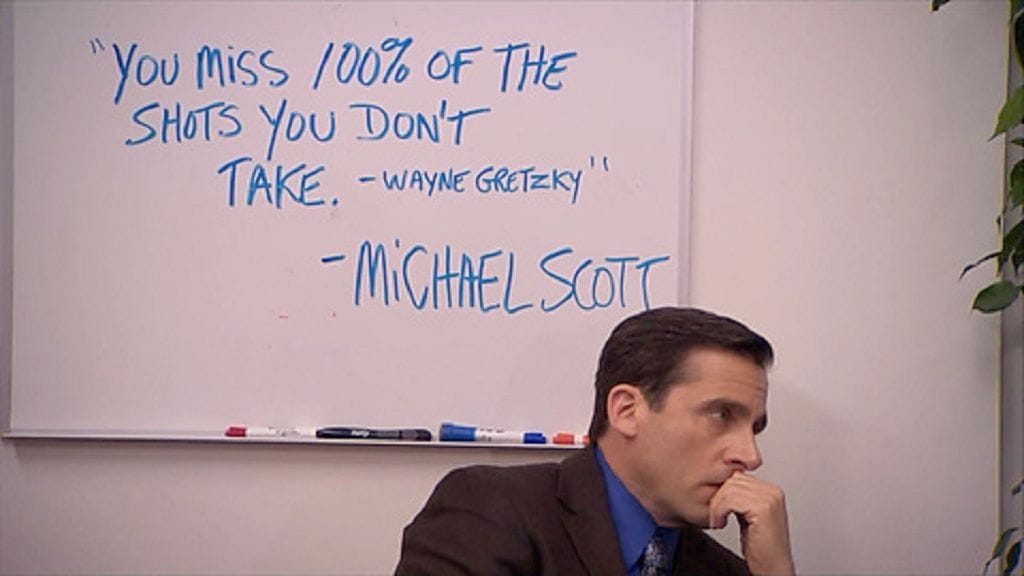
You miss 100% of the shots you don’t take. I think Wayne Gretzky said that. Or maybe Michael Scott.
Either way, it applies.
Early in the night, there’s almost always a hand you shouldn’t play. A weak ace. A couple of suited cards that feel more promising than they are. Something that looks just good enough to convince yourself to stay in.
Sometimes it works, and the table lets you hear about it. Most of the time, it doesn’t.
But you learn something either way. If you fold every marginal hand, you don’t lose much. You also don’t learn much. You sit back, scroll your phone, catch a few minutes of Monday Night Football, and wait for a better opportunity that may or may not come. When you play the hand, you get feedback. You see how others react. You experience the consequences of your decision in real time.
That feedback, even when it stings a little, is what actually teaches you how to play.
No one at the table is running a formal retrospective, but over time you start to notice patterns. The hands you chase. The moments you hesitate. The times you knew better and did it anyway. You don’t need a framework to see it. You just need enough hands played to recognize yourself in the pattern.
Sales teams don’t always give themselves the same benefit.
In most organizations, the pace of work leaves very little room to revisit what just happened. A deal is won or lost, and the instinct is to move on to the next one as quickly as possible. There is always another call to make, another pipeline review, another quarter looming in the distance. Reflection gets deferred, or skipped altogether. But without that reflection, experience doesn’t always turn into learning.
Enablement often tries to solve this by increasing preparation. More training. More content. More guidance before the call ever happens. Some of that is necessary, but confidence doesn’t come from knowing what might happen. It comes from having been in the hand, deciding, and living with the results.
Learning is social
“Why’d you play that hand?”
“Why didn’t you fold your off-suit cards?”
“What did you see on that board?”
Those are the questions that have made us better players. Maybe not players who could defeat a Chris Moneymaker or Phil Hellmuth, but decent players who are welcome in my basement every month.
These types of questions don’t come from an instructor standing at the front of the room or a perfectly structured debrief at the end of the night, but instead emerge in the middle of the game, with chips still on the table and just enough pause between hands for someone to lean in and ask what the rest of us were thinking.
Curiosity in a community leads to learning. Over time, our table has become a place where questions are expected, explanations are offered, and decisions are revisited without much ceremony.
We talk through why we played the way we did, sometimes with clarity and sometimes while trying to make sense of a decision that didn’t quite hold up. We offer suggestions for the next hand while also giving each other a hard time when someone makes a call that feels, at least to everyone else, a little off.
It is not especially polished, and it is certainly not optimized, but it is effective because the learning is tied directly to lived experience rather than abstract principle. The conversation is anchored in something that just happened, which means the feedback carries a different kind of weight, and the insight tends to stick a little longer.
Adult learning theory has long pointed to this dynamic, suggesting that skill acquisition is not primarily an individual exercise but a social process, shaped through participation in a community of practice where people can observe, question, and refine their thinking.
 Sales Enablement Collective
While coaches and managers can guide the process, much of the actual development happens in the space between peers, where people are willing to ask why, to reflect out loud, and to admit when something did not go according to plan.
In sales enablement, we do not always design for that kind of environment. We tend to emphasize content and clarity, building decks and frameworks that aim to transfer knowledge efficiently, but we sometimes overlook the conditions that allow that knowledge to take root.
What changes things is not just access to information (we all have ample access to information these days), but the willingness to make thinking visible. When decisions are shared and questioned in the open, they become easier to understand, easier to challenge, and eventually easier to improve.
Over time, that kind of shared reflection on our prospecting, discovery, pitching, and negotiating creates a rhythm of learning that no single training session can replicate.
You win by staying in the game
At the end of the night, the winner is seldom the person who won a single big hand, even though that’s the moment everyone remembers. It’s usually the person who accumulated chips over time, winning small pots, avoiding big losses, and staying in the game.
That’s not just a quirk of dad poker but how the game actually works.
In any given session, the overwhelming majority of hands never turn into dramatic, all-in moments. Most are decided early or played cautiously, with relatively small amounts of money at stake and because those hands make up most of what happens over the course of a night, they end up having an outsized impact on the outcome.
The mathematics of Texas Hold ‘Em reward consistency, not heroics. What looks like a quiet, uneventful night at the table is often the most profitable one.
Professional players understand this intuitively, which is why they don’t play for moments, they play for edges. They make hundreds of small decisions, each with a slightly positive expected outcome, and trust that over time those decisions will compound into something meaningful.
The goal isn’t to win the biggest hand. It’s to still be there, steadily ahead, when the night ends.
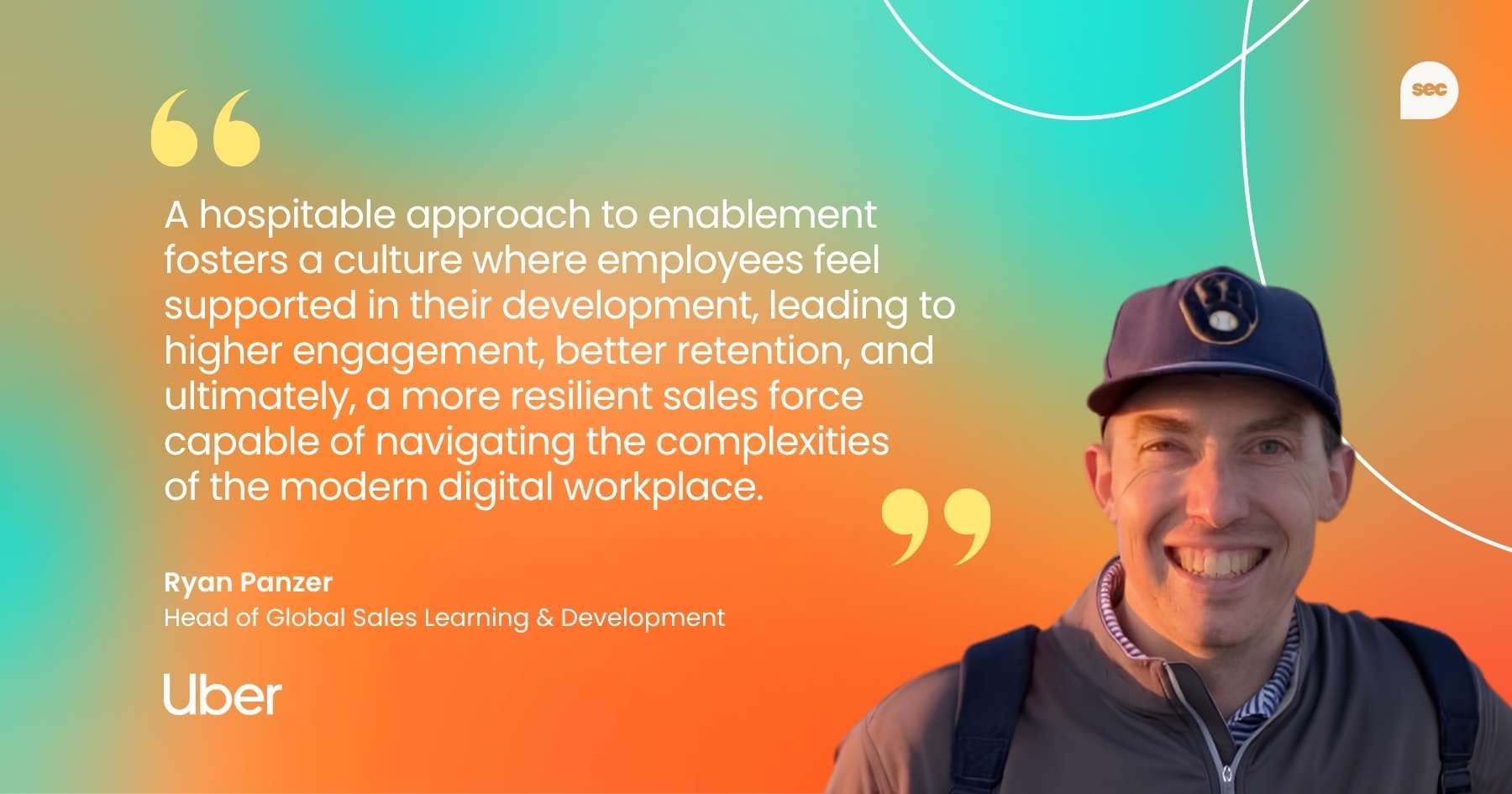
Sales performance works the same way, even if we tend to celebrate it very differently. Most deals are not won in a single breakthrough moment or a perfectly delivered pitch. They’re shaped by dozens of smaller interactions: a well-run discovery call, a timely follow-up, a clear next step, and a disciplined qualification decision.
Just like at the poker table, those moments don’t feel dramatic in isolation. The problem is that most enablement efforts are built around the big hand; we train for the big RFP, the C-level objection, and the tense negotiation, when in reality, outcomes are driven by how consistently reps execute the small ones.
The opportunity for enablement isn’t just to prepare reps for high-stakes moments but to help them build habits of curiosity and judgment that show up in the low-stakes decisions we make. Don’t bust early. Play to stay in the game.
Hospitality is under-rated
In the end, Dad's poker isn’t about the cards or how the chips fall, but about hospitality. A shared meal, banter about Wisconsin sports and a basement floor that is (mostly) clear of kids' toys. The cards are there. The chips are stacked. There’s a seat for everyone. The game starts on time and, just as importantly, ends on time.
No one is wondering what to do or where to sit or whether they should have had dinner beforehand. You just walk downstairs and play. Hospitality is why we keep coming back.
Danny Meyer writes in Setting the Table that hospitality is not just about service but about how people feel because of the environment you’ve created for them. In a restaurant, it’s not the food itself but the experience of being there. It’s not the operation of the restaurant, but the sense that someone thoughtfully considered your experience. When that sense is missing, it shows.
This is true for Danny Meyer’s Shake Shack, it’s true for card games in the basement, and it’s especially vital for business.
This is why it matters
In the context of sales enablement, this means moving beyond the delivery of content and focusing on the delivery of an experience that respects the salesperson's time, challenges, and professional growth.
When enablement is hospitable, learning stops being a compliance chore and becomes a resource for growth.
Hospitality and business outcomes are more connected than we tend to admit. While some organizations attempt to drive short-term revenue by heightening the pressure under which their teams operate, the smartest organizations drive durable, long-term outcomes by creating an environment conducive to growth at multiple levels.
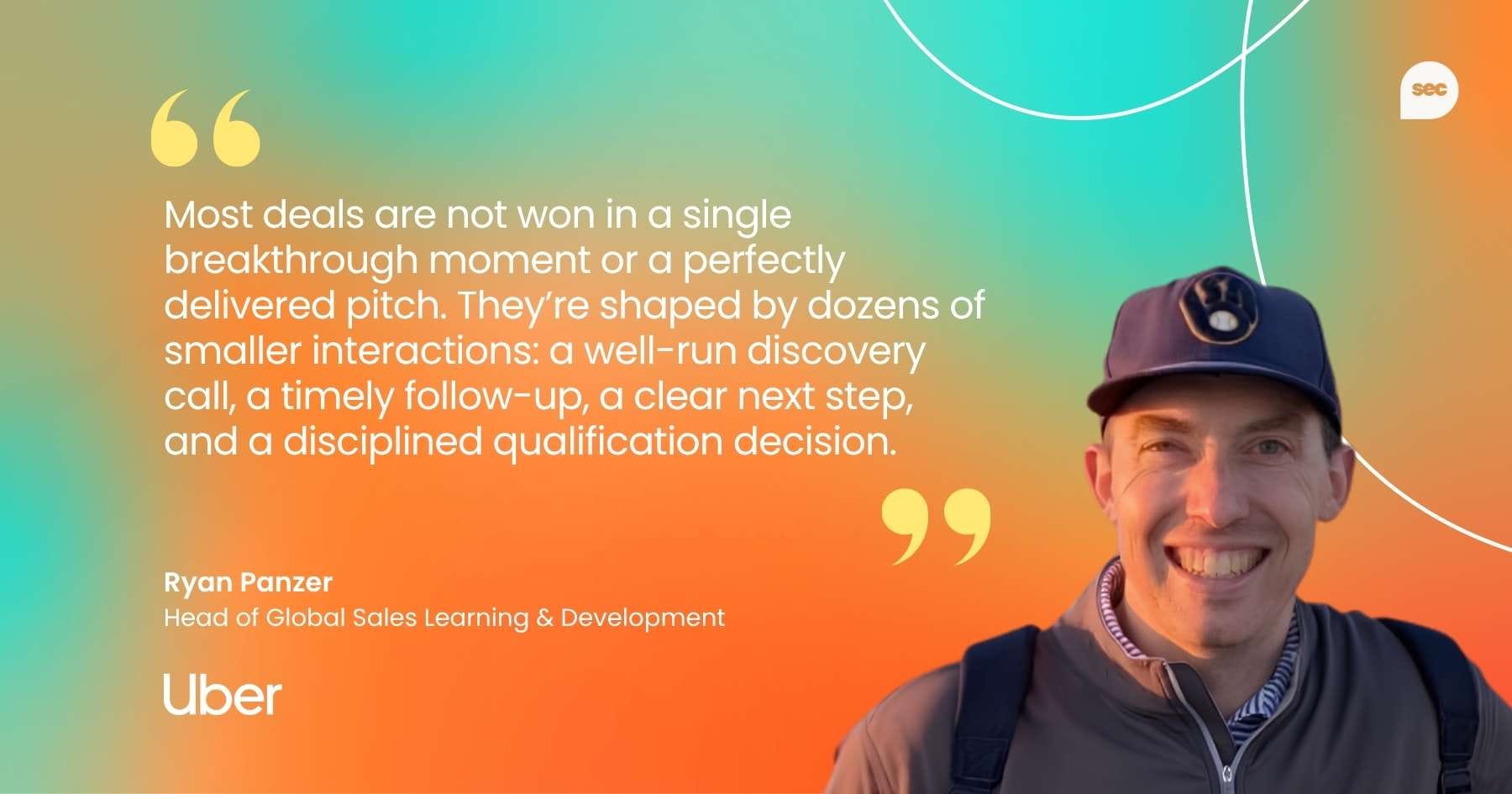
This hospitable approach to enablement fosters a culture where employees feel supported in their development, leading to higher engagement, better retention, and ultimately, a more resilient sales force capable of navigating the complexities of the modern digital workplace.
None of those things are remarkable on their own, but together they create an environment where people can focus on the work in front of them. Hospitality, in that sense, is less about being warm and more about being prepared. It is the work of making things easier for someone else before they even realize they needed it.
In a restaurant, it shows up in the way a table is set. In a basement poker game, it shows up in how the night unfolds without much effort. In sales enablement, it shows up in whether a rep can actually sit down and play.


Sales enablement insider
Thank you for subscribing
Level up your sales enablement career & network with sales enablement experts.
An email has been successfully sent to confirm your subscription.
 Follow us on LinkedIn


.svg)

Start the conversation
Become a member of Sales Enablement Collective to start commenting.
Sign up now