


Conversational intelligence tools like Gong have completely changed the game for enablement teams, allowing us to monitor and measure behavior change at scale.
However a lot of enablement thought leadership today fails to answer the question “How can I use this tool in my role right now?”
In this post, I'll share a few of my favorite Gong hacks for:
- Gaining trust with stakeholders early in a new role
- Automating playlist building at scale
- Building discovery call repositories
- The best ways to use Streams to keep your listening hyper-focused on the things that matter
Your first week in a new enablement role
Assuming Gong is properly configured (smart trackers for methodology, keyword trackers for competitors, strategic product areas, and primary use cases are set up), the first place I typically start is listening to high performers and low performers to determine the delta between the two.
Ideally you'll look at calls from closed won deals of high performers (that were recommended by the reps themselves, or their manager).
However, I usually try to self-serve and save my "asks" for later – once I've developed a bit more social capital with my new teammates.
Once you've identified the calls & deals to shadow, this is a great time to leverage Gong's Account AI or Ask Anything to find key insights quicker.
I like to review some calls without AI to build initial hypotheses and then leverage Ask Anything to help me go deeper, quicker.
From here I typically do a readout with sales leaders to validate hypotheses and takeaways.
Typically this initial analysis and leadership readout informs a future focus area, or at a minimum gives me some examples of "what good looks like" from high performers that I can leverage in training content.
Automating playlists at scale
In an ideal world, you'd build playlists with the help of rep and manager submissions – but this is a fairly manual process for both enablement and the managers.
To protect field time and give enablement time to curate the best of the best, I build my first playlists utilizing the Gong Stream future.
This way, you can automate playlist building by identifying your highest performers, only looking at calls from them, and then bringing in additional filters for calls that meet specific criteria.
These streams are essentially playlists that update themselves when new calls meet those criteria in real time.
Here's a list of example playlists I've built following this process:
#1. Best Wins
I only looked at first calls where:
- The deal is now closed won
- Where rep on the opportunity is a high performer (I typically select the top 5)
- Close date is last 90 days (to ensure the content is fresh)
I then add filters to:
- Make sure the deal cycle is less than or equal to average
- Add in an ACV (Annual Contract Value) filter to ensure the deal is at or larger than the average deal size.
For this playlist, I'm prescriptive with reps on how to use it. They should listen to the first call and then click through the other calls all the way to closed won, leveraging Points of Interest and Gong's Ask Anything to help them with their shadowing.
#2. Best Calls by Stage
This involves a similar flow as above, but I ask RevOps to pull in Stage Conversion data (or do it myself).
Using this data, I can filter each playlist to only the highest performing reps for each stage.
Meanwhile, I can leverage calls from Jenny and John for the Best of Stage 3 playlist since they have stronger Stage 3 to Stage 4 Conversion rates.
Since Gong timestamps the opportunity stage at time of call, it's fairly simple to pull out the best calls per stage following this flow with the same foundational criteria from the Best Wins playlist. (e.g. closed won opp, recent close date, above ASP, and below average sales cycle.)
As you can imagine, you can take this approach to building automated playlists that update themselves with just about anything you want.
As long as the data is in Gong or pushed to Gong from your CRM, you can get real creative with the call criteria.
Other examples
I've also done this for best demo calls, best wins based on a sales motion or product area, best wins versus competitors, or pricing calls where the title mentions "pricing".
Obviously, less is more – and manually curated playlists will always be higher quality, but this is a great way to make your enablement team more efficient and get a quick wins out the door so no one is complaining about a lack of examples.
Build a disco question repository
One of my favorite quick wins with front-line managers is showing them Gong's Points of Interest section on the Call Info Page.
There's a sub-section that helps you find questions asked by the seller and questions asked by the prospect.
I usually skim through about 50+ calls using this section to find my favorite discovery questions at scale and build a "Best Disco Q" repository based on my findings.
The manager use case is showing them an easy way to validate what questions were or were not asked during the call from a MEDDPICC perspective.
They're able to quickly review the quality of the seller's discovery flow and coach from there on missed opportunities in the conversation.
You could also follow this flow to find FAQs or use Ask Anything to find common objections from prospects and work with sales managers to build cheat sheets based on your findings.
 Shun Cheah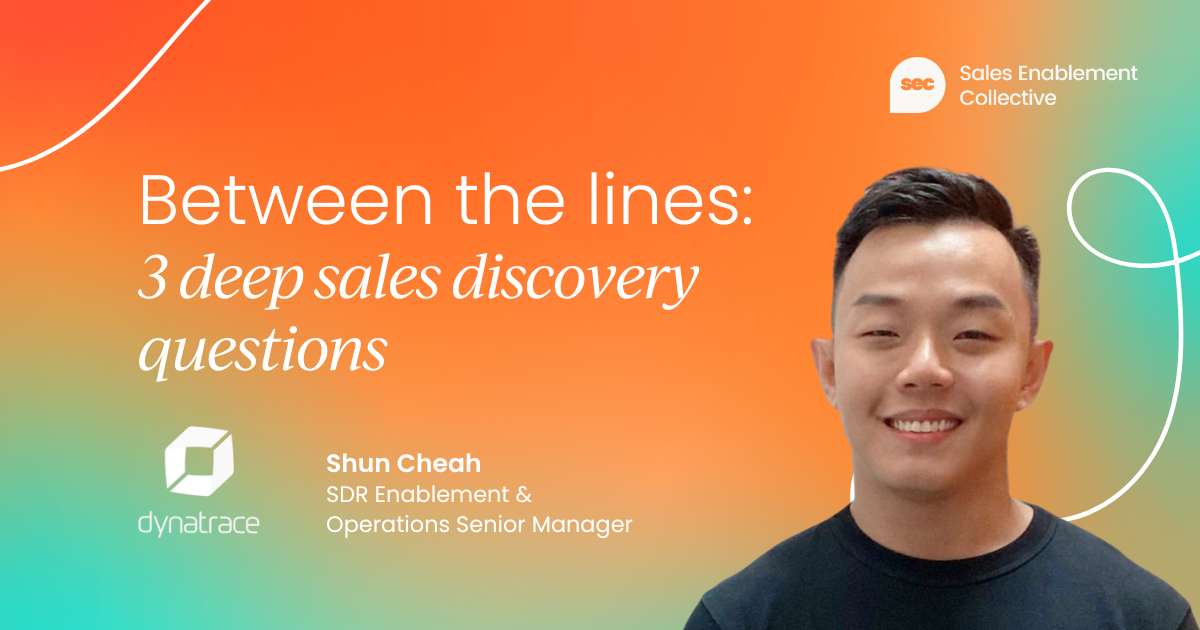
Getting smart with Streams
Once I've deployed a few quick wins and have a stronger take on weak points in the business, I start leveraging Gong Streams to help me focus my listening.
For example, let's say we're not so good at converting Stage 3 sales opportunities to Stage 4. I'll create a Gong Stream that notifies me via Slack and email when calls meet this specific criteria.
Once I've developed a hypothesis as to why deals are stalling in Stage 3 (e.g. reps are proactively offering trial extensions and/or prospects are asking for them at the end of their trial), I can build trackers to monitor this behavior, then create another Gong Stream notifying sales leadership when these happen in real time.
This gets me a lot of brownie points.
This is just one example. I've done this for deals where we don't set next steps, reps proactively mentioning discounting too early in deals, problem competitors mentioned by prospects early in the sales process, and more.
You can follow a similar process with Product area mentions or other cross-functional initiatives (e.g. new pricing, partnerships programs, how reps are positioning post-sales offerings, etc.) in order to help other teams ensure that the desired behaviors / sales pitch is actually happening in the field.
In conclusion
Gong is the best way to find problems, validate behavior change, or answer questions at scale.
Whether it’s enabling follow-through on key enablement initiatives or building your onboarding playlists in a scalable manner, these are some of my favorite hacks for getting the most out of Gong whenever I start a new enablement gig.


Sales enablement insider
Thank you for subscribing
Level up your sales enablement career & network with sales enablement experts
An email has been successfully sent to confirm your subscription.
 Follow us on LinkedIn
Sales enablement insider
Thank you for subscribing
Level up your sales enablement career & network with sales enablement experts
An email has been successfully sent to confirm your subscription.


.svg)
