













Every year, organizations invest in enablement. New methodologies get introduced. Training sessions are delivered. Managers attend the launch. Reps complete the modules.
And then, a few weeks later, very little has actually changed.
The pipeline reviews still sound the same. The deal conversations still rely on relationships and gut feel. The methodology that looked so compelling on day one has quietly been set aside.
This isn't a knowledge problem. In most cases, reps and managers know what good looks like. They can articulate the methodology. They understand the process.
The event-based trap
Most enablement is designed around events. A kickoff. A training day. A product launch workshop. A methodology rollout.
Events are necessary. They create shared context, build energy, and mark a moment of change. But they are not the mechanism of behavior change. They are the starting point.
The mistake is treating the event as the program. Running a training day and then measuring completion rates as proof of impact. Moving on to the next initiative while the behavior from the last one is still finding its feet.
Behavior changes through repetition, reinforcement, and consequence, not through a single well-designed session. New behaviors require deliberate, repeated practice before they become default.
In a commercial environment, where existing habits are deeply ingrained and the pressure to revert is constant, the reinforcement must be sustained and structural.
Why reinforcement fails in practice
Reinforcement breaks down for a few predictable reasons.
The first is manager involvement. Frontline managers are the single most important factor in whether new behaviors take hold. The manager who runs the weekly pipeline review, who coaches on deal strategy, and who asks the questions that signal what actually matters.
When managers aren't equipped to reinforce the methodology in the flow of work in their one-to-ones, in deal reviews, or in ride-alongs, the enablement program operates in isolation from the day-to-day. Reps quickly learn that the methodology matters in training, but that the old way is still what's expected in the field.
The second is process alignment. Behavior change sticks when the process makes the new behavior the path of least resistance.
If the CRM stages don't reflect the methodology, if the forecast call asks for gut feel rather than evidence-based criteria, if deal reviews focus on pipeline quantity rather than quality of engagement and next steps — the environment is working against the behavior change, not for it.
The third is sequencing. Organizations often layer new programs on top of existing ones before the previous initiative has taken hold. At some point, reps start to wait out the programs rather than invest in them.
What actually moves behavior
Three things make the most significant difference in practice.
The first is making the new behavior easy to inspect. If managers can't see whether the methodology is being applied in call recordings, in CRM data, or in deal notes, they can't coach it. And if they can't coach it, they default to coaching on outcomes rather than behaviors.
"Why isn't this deal moving?" is a very different conversation from "Talk me through how you've mapped the stakeholders and what's driving their decision criteria."
The second is connecting enablement to the operating rhythm. The most durable behavior change happens when the new way of working is embedded into the cadences that already run the business, not as a separate initiative, but as the lens through which pipeline reviews, forecast calls, and one-to-ones are run.
The third is reinforcement over time, not just at launch. What does reinforcement look like at week two, week six, and week twelve? What signals will tell you whether behavior is shifting or reverting? How are managers being supported to coach consistently, not just in the weeks after a training event?
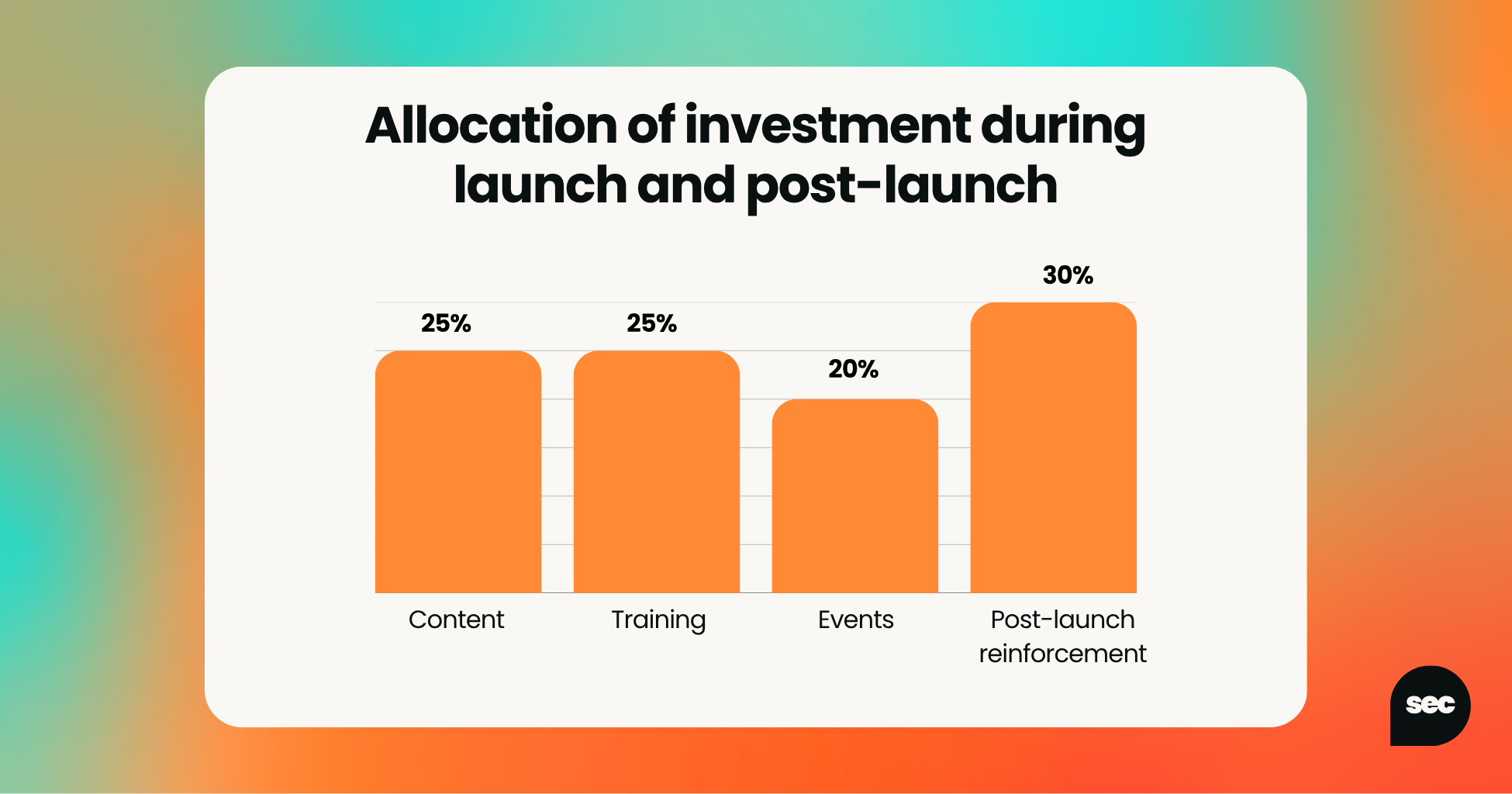
Most enablement programs invest heavily in the launch and very little in what comes after. The ratio should probably be inverted.
 Shun Cheah
The manager's question
If there's one thing I'd ask any commercial leader to sit with, it's this: how involved are your frontline managers in your enablement programs, not as attendees, but as active participants in reinforcement?
Are they coaching to the methodology in their deal reviews? Are they using the same language as the training? Are they held accountable for the adoption of the behaviors, not just the outcomes?
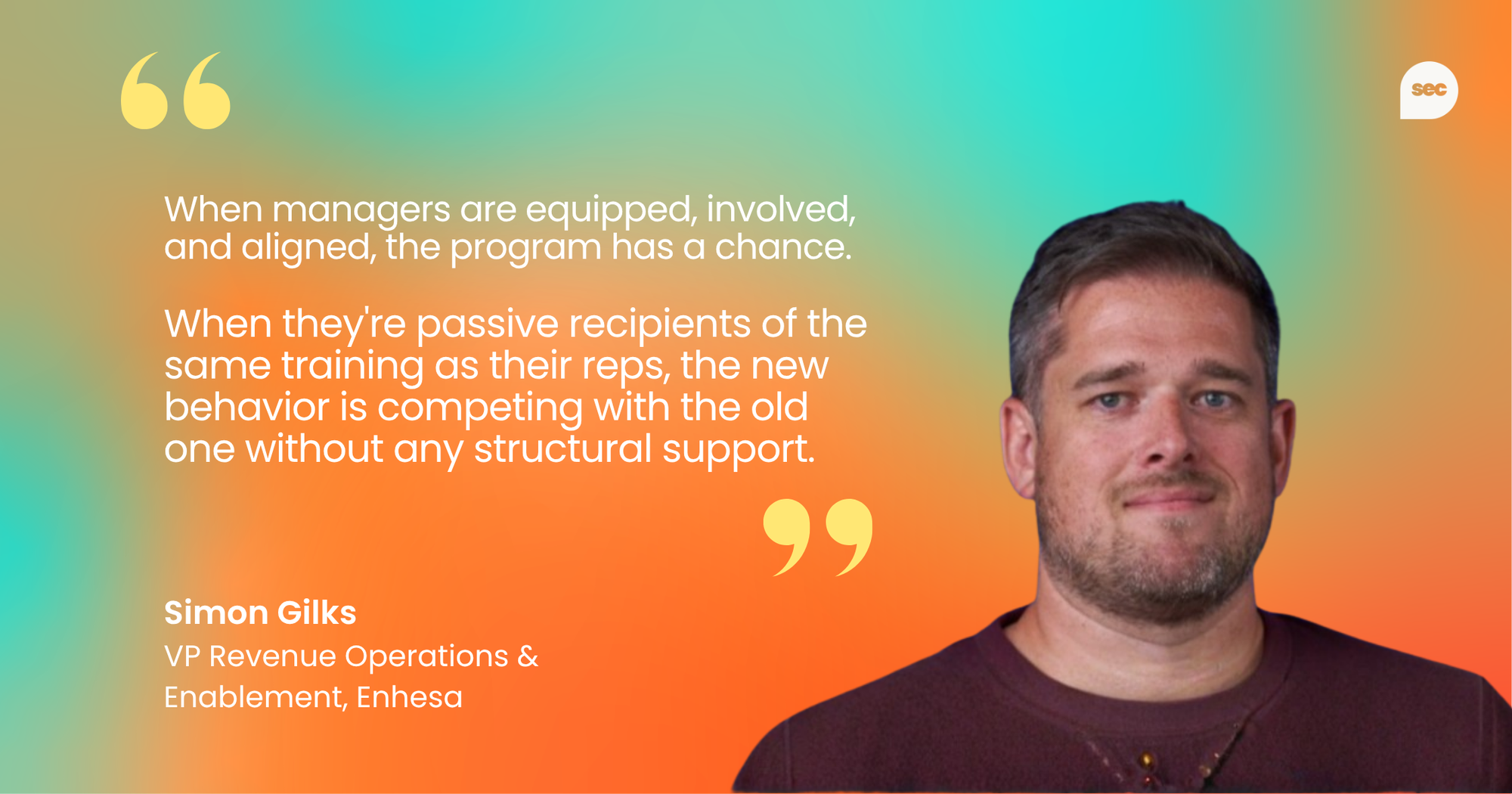
The difference between enablement that changes behavior and enablement that doesn't usually comes down to this. When managers are equipped, involved, and aligned, the program has a chance. When they're passive recipients of the same training as their reps, the new behavior is competing with the old one without any structural support
When evaluating an enablement program, most organizations ask: Did people complete it? Did they score well? Did they enjoy it?
These aren't bad questions, but they're measuring the event, not the outcome.
The more useful question is, six weeks after this program ended, what is different about how people are working?
Are deal reviews more structured? Are reps qualifying earlier and harder? Are forecast conversations grounded in evidence rather than confidence?
If the answer is "not much," the program delivered knowledge. It didn't change behavior.


Sales enablement insider
Thank you for subscribing
Level up your sales enablement career & network with sales enablement experts.
An email has been successfully sent to confirm your subscription.
 Follow us on LinkedIn


.svg)

Start the conversation
Become a member of Sales Enablement Collective to start commenting.
Sign up now