










I'll be honest with you: most enablement conversations stay at the level of strategy and philosophy. And that's valuable. But at some point, you need to get into the weeds. You need the actual playbook.
That's what I want to share with you here. The operational framework I've been refining and deploying for the last decade, across SaaS, ed tech, hospitality, and most recently at Webflow, where I now lead go-to-market strategy, programs, and enablement.
Before I get into it, a little context. My first ten years were spent in sales, doing account management, customer success, SDR, and AE work. That background shapes everything about how I approach enablement.
Because when you've carried a quota yourself, you understand what's actually at stake for the people you're supporting. You understand that what ends up in a seller's bank account matters. A lot.
When I joined Webflow on December 1st, my very first question was:
Can I see all the quota plans?
Because that's where I start. You build enablement around what the business actually needs sellers to do, and quota plans tell you exactly that.
So let's get into it.
Start by defining what enablement actually means to you
Here's something I do whenever I'm speaking to a group of enablement professionals: I ask everyone to write down their own definition of enablement, then share it with the person next to them.
Every time, the definitions vary. And that's the point. There's no single right answer, but the fact that we struggle to align on a shared definition is actually one of our biggest challenges as a function.
Here's how I see it. Enablement is a strategic partner to the business. We're aligned to C-suite OKRs, and those OKRs should feed everything we do: how we strategize, what we prioritize, and how seller behaviors connect to business outcomes. We're making sure the right skills, tools, processes, and data are in place to support the full customer lifecycle.
What we're absolutely not doing is policing adoption. We're not pulling Zoom attendance reports to see who showed up and when they left a training session. That's not the job.
The job is evolution. And I deliberately use the word evolve rather than change, because change feels hard and disruptive, while evolution feels natural and continuous.
Too often, enablement gets handed something at the very end of a process. A new product launches, a new tool gets rolled out, and someone says, "Hand it over to enablement." With no context, no strategy, no process documentation. That's a frustrating place to start.
The better path is getting involved early. Working with RevOps and sales ops to build the process. Partnering with IT on the tools. Understanding the data. And then, once all of that is in place, wrapping it together and asking: what skills does the seller need to execute this?
That's the sequence. And it's the foundation of everything else I'm going to walk you through.
For expert advice like this straight to your inbox, sign up for Pro+ membership.
You'll also get access to 100+ hours of exclusive video content, a complimentary Summit ticket, and so much more.
So, what are you waiting for?
The five-part operational playbook
I've organized this into five components, and I'd encourage you to think about them in order. They build on each other.
1. Understand the customer journey
This sounds obvious, but it's where a surprising number of enablement teams fall short. Before you build anything, you need to map the full customer journey and identify who owns each stage of it.
Think about it this way: you've got the initial funnel, which might be owned by SDRs and marketing. Then acquisition through to deal close, owned by AEs. Solution engineers might come in mid-cycle to support a value-driven demo. Then once the customer signs, they onboard, go live, expand, and eventually come up for renewal.
Here's something worth paying attention to: most customers turn over every 18 to 24 months. That means even your CSMs and account managers are essentially running a new sales cycle with new buyers on a fairly regular basis. The idea that renewals just happen on their own is a risky assumption.
So map the journey. Identify who owns what. Then ask yourself: which parts of that journey is enablement responsible for supporting?
This clarity does something powerful for your team. When an enablement business partner truly owns the AE relationship, for example, they know that role inside and out. They sit in on deal reviews, forecast calls, and QBRs. They're at the table as a partner, not as support staff. That distinction matters enormously, both for how leaders perceive enablement and for the trust you're able to build over time.
 Sales Enablement Collective
2. Build a clear, stage-by-stage sales process
Once you know the customer journey, you need to look hard at your sales stages. I actually go into Salesforce and walk through an opportunity. I look at what the stages are, how many there are (Webflow has eight; a previous company had five), and then I build out a framework that maps each stage to four things: seller actions, buyer actions, skills needed, and assets to support execution.
That last one, buyer actions, is something people often overlook. But it's critical. A deal shouldn't progress in your CRM just because the buyer showed up to a call. I heard a story recently from a CTO who gets prospected regularly.
He was on a call with four people from a vendor, and not once did they ask him a question. He turned off his video, put them on mute, and waited for the slide deck to end. Then he said he had no questions and left. He'd bet that deal got moved forward in Salesforce because he attended.
That's a problem. Buyer engagement, real engagement, has to be a qualifying criterion at every stage.
At one company, we built what we called the Sales Advantage: a document that mapped seller actions to verifiable buyer outcomes at every stage. It became the forecasting guide. It became the coaching guide for frontline leaders. Reps had it on their desks during pipeline calls. Leaders used it to ask: has the buyer done this? If not, what do we need to do to get there?
We also organized our content in Highspot around these sales stages. So if a rep had a deal in stage two, they could go straight to the stage two section and find exactly the assets, discovery guides, and templates they needed. Everything mapped to the journey.
Fair warning: the first time you build this, it'll take around six months. The second time, maybe three. It's unlikely to get much faster than that, and that's okay. It's worth the investment.
3. Run intentional pipe gen programs
This is where a lot of enablement teams either go too light or hand it off entirely. I've seen organizations that are very campaign-driven but don't connect those campaigns to skill-building. And I've seen enablement teams that teach skills in isolation without tying them to pipeline outcomes. The best approach brings both together.
At Webflow, this work lives in a dedicated revenue programs function that works closely with enablement. The team is campaign-driven, looking at metrics to identify pipe acceleration opportunities.
We typically launch two programs at the start of a quarter, then two more around the six-week mark. We work with product marketing, our CRO, and the broader company strategy to make sure what we're building reflects where the market is heading.
Every pipe gen program we run follows the same bill of materials. There's a WIIFM (what's in it for me) component so the audience immediately understands why this matters to them. There's a target list, because not every seller needs to be in every program. There are defined personas, outreach templates, a point-of-view deck, and competitive intelligence on challenges and pains.
When you have a repeatable structure like this, the conversation with product marketing shifts. It stops being about who owns what, and starts being about what we should build next, because everyone already knows how to build it. That's a much better use of everyone's time.
4. Map your enablement team to the roles you serve
You can't serve everyone at once. And trying to do so is one of the most common ways enablement teams spread themselves too thin and lose impact.
When I join a new organization, I look at the customer journey, identify all the revenue-generating roles, and then think carefully about where enablement should focus first. Maybe you start with AEs. Then you expand to SDRs. Then partner account managers. Then solution engineers. The sequencing matters.
What I've found works well is creating enablement business partner roles that align to specific parts of the revenue organization. These aren't generalists. They're deeply embedded in their lane. They know the metrics, the gaps, the personalities, and the pressures. And because they're showing up in forecast calls and deal reviews, they're earning trust with leaders in a way that's genuinely hard to replicate otherwise.
 Sandy Robinson
5. Lead with the leaders
This is probably the most important piece, and the one most often left until the end. Leaders eat first. Always.
In practice, that means two things.
First, leaders always get a preview of what's going to the field before the field sees it. When I have an SKO coming up, we run a leader preview session about ten days before. They get an hour with the content. They get facilitation guides for any breakouts they're running. They show up to the event informed and energized, not caught off guard.
Second, there's what I think of as a Frontline Leader Connect program: two days of immersive leadership enablement, twice a year, in person. The CRO is there. Directors are there.
The content is built around what leaders actually need: how to run their business, how to forecast well, how to run a good one-on-one, how to have difficult conversations, how to run a deal review that's genuinely useful rather than just a chance to berate someone's pipeline.
We supplement that with monthly virtual sessions, each focused on a single topic, tightly facilitated, one hour long.
The goal is to scale through frontline leaders. They're the multiplier. If they're well-equipped, the impact ripples out to every rep on their team. If they're not, even the best enablement content will underdeliver.
Organizing everything into deployment containers
Once you've got all five pieces in place, you need a way to communicate clearly to the business what enablement is responsible for and how it all gets delivered.
I use four containers: onboarding, a sales skills academy, a pipe gen academy, and a sales leader academy. Everything we do falls into one of those buckets. It makes the function legible to the rest of the organization, and it makes prioritization conversations much easier.
When a new request comes in, you can ask: which container does this belong to? That question alone helps you avoid scope creep and keeps the team focused on work that's genuinely strategic.
 Ryan Panzer
A note on AI
Everything I've described above is being shaped by AI right now, and that's a good thing, as long as you're thoughtful about it.
At Webflow, we evaluate AI options first when we're building or iterating on anything. We're building a Clay layer that delivers immediate Gong call insights directly in Slack, including recommended follow-up emails, suggested assets, and next steps for the rep.
That said, I want to be clear about something. AI doesn't replace leaders as coaches. The human element of what we do matters enormously. What AI does is give sellers more time with customers and less time on administrative work. It creates a safe space for role-playing and skill practice. It surfaces insights faster than any manual process could.
But sellers still need to read what AI gives them. Critical thinking still matters. The best use of AI in enablement is as a tool that amplifies human judgment, not one that replaces it.
Bringing it all together
Let me leave you with the full picture.
Understand your customer journey and map your team to the roles that serve it. Build a sales process that's tied to both seller actions and verifiable buyer outcomes. Run pipe gen programs that connect campaigns to skill-building. Serve your leaders first, always. And deploy everything through clear, consistent containers so the business knows exactly what enablement owns.
This playbook has worked across SaaS, ed tech, and beyond. It's worked in companies with five sales stages and companies with eight. It's worked in growth-stage businesses and in more established organizations. The specifics adapt, but the structure holds.
And through all of it, the thing I keep coming back to is this: enablement is about people. The sellers we support, the leaders we partner with, and the customers they serve. Get the operations right, and you create the conditions for those people to do their best work. That's the whole point.
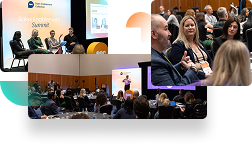
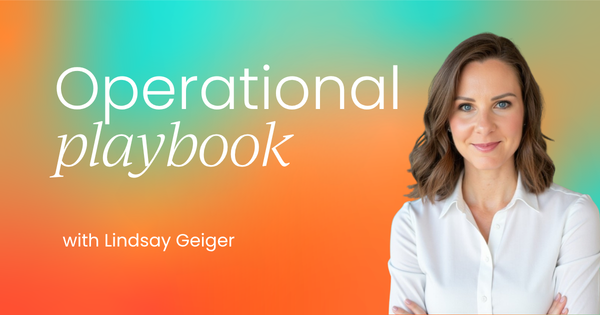
Lindsay Geiger, Senior Director, GTM Programs & Strategy, Webflow, gave this talk at our Sales Enablement Summit, Washington, DC, 2026.


Sales enablement insider
Thank you for subscribing
Level up your sales enablement career & network with sales enablement experts.
An email has been successfully sent to confirm your subscription.
 Follow us on LinkedIn


.svg)

Start the conversation
Become a member of Sales Enablement Collective to start commenting.
Sign up now