


When sales enablement took off, its offshoots followed.
Revenue enablement, GTM enablement, and partner enablement each carved out their own territory and they've stuck around because they work.
Partner enablement, in particular, has become one of the most valuable plays in the enablement toolkit. As go-to-market motions get more complex, with more channels, more stakeholders, and more indirect revenue , the ability to enable the people outside your organization to sell as effectively as those inside it has become a genuine competitive advantage.
Most enablement professionals cut their teeth on direct sales. They know how to build playbooks, run certifications, and create content for internal reps but the moment they're asked to enable a channel partner, someone who also sells three of their competitors, who they speak to once a quarter, and who has their own processes and priorities, the playbook changes.
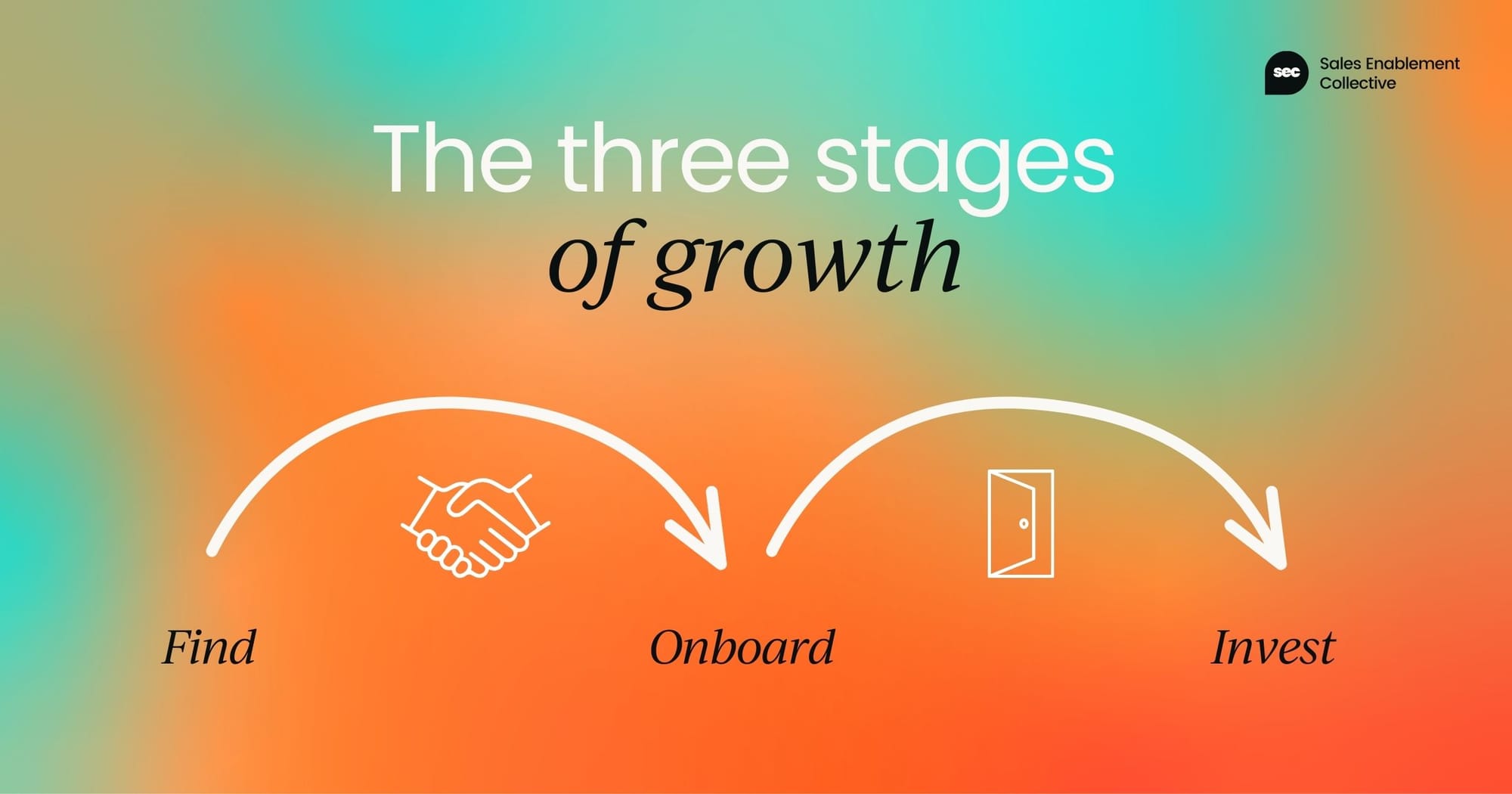
Enabling your organization's external partners is a powerful strategy with extraordinary benefits but it also poses a unique set of challenges that most enablement professionals aren't used to.
This guide breaks down what partner enablement is, why it matters, where it differs from sales enablement, and how to do it well.
What is partner enablement?
Partner enablement is the structured process of equipping channel partners with the knowledge, content, training, and support they need to sell, implement, and market your products effectively. Done well, it helps partners represent your brand with consistent messaging and deliver reliable customer outcomes.
The two components of partner enablement
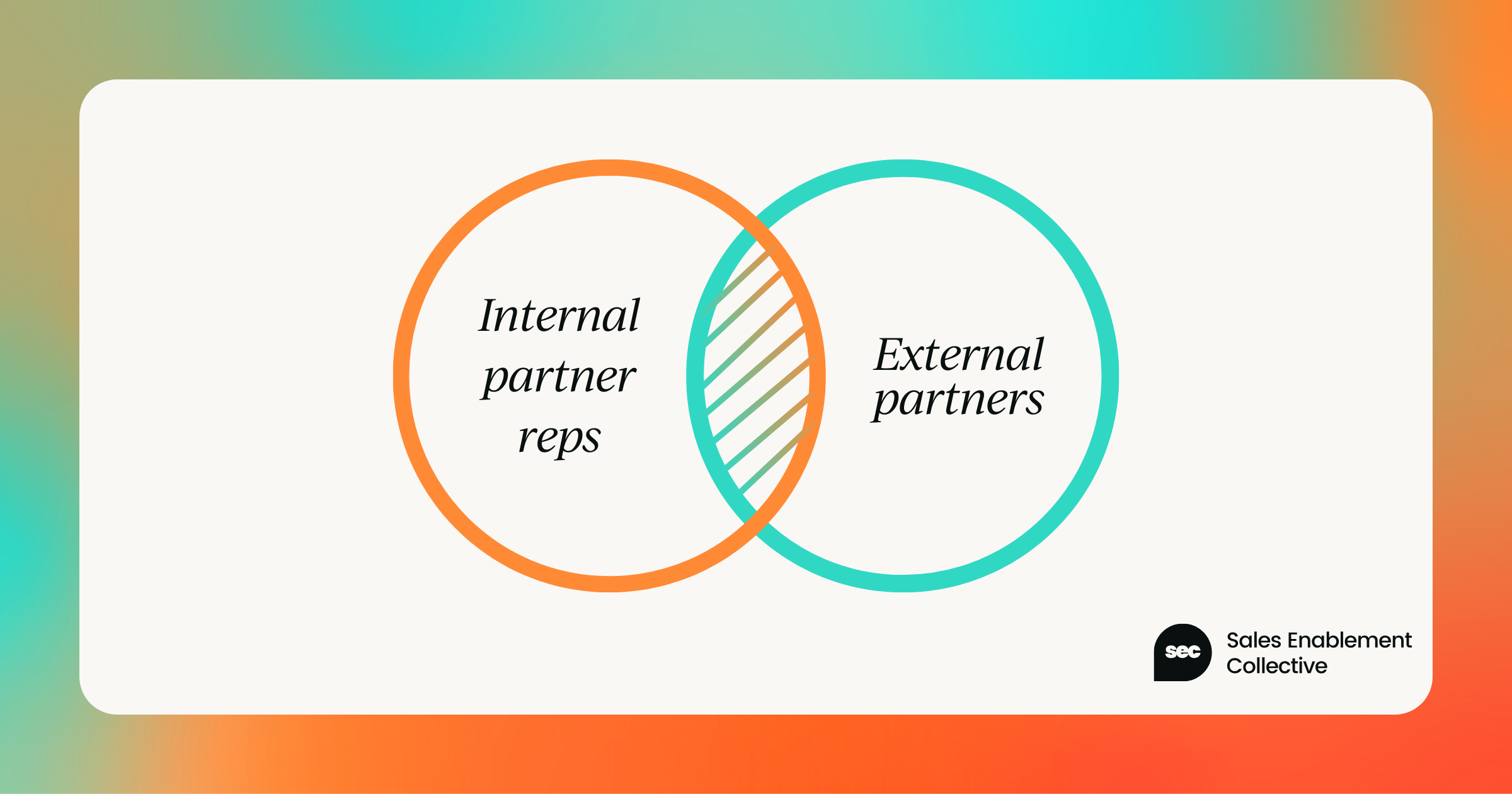
Partner enablement typically includes two connected workstreams:
External partner enablement supports the people who sell and deliver your solution on the partner side. This often includes resellers, distributors, managed service providers (MSPs), independent software vendors (ISVs), and system integrators. External enablement focuses on product knowledge, positioning, sales plays, implementation guidance, and customer success best practices.
Internal partner enablement supports your channel organization, partner account managers, alliances, channel sales, partner marketing, and solutions engineering. Internal teams need repeatable processes, clear messaging, and operational tooling to recruit, onboard, coach, and support partners consistently.
Why both components matter
If external partners aren't enabled, they may struggle to position your solution, leading to slower deal cycles and inconsistent customer experiences. If internal teams aren't enabled, partners often experience unclear processes, delayed support, and fragmented communication.
Strong partner enablement is ongoing. Your product, competitive landscape, and positioning will evolve, and your program needs a reliable mechanism to keep partners current.
This dual focus is what separates effective partner programs from underperforming ones.
Why is partner enablement important?
Industry research shows that partners influence a significant share of B2B revenue, especially in channel-heavy categories.
When enablement is patchy, it shows: 24.2 percent of enablers say more than eighty percent of their content goes unused. No wonder partner results feel impossible to forecast or scale.
 Alex Walton
Partner enablement improves results by making it easier for partners to learn your messaging, execute repeatable sales motions, and deliver consistent customer outcomes.
- More predictable partner revenue
Clear messaging, sales plays, and onboarding reduce guesswork and help partners sell with confidence. In fact, organizations in the SEC Salary & Landscape Report 2025 saw pipeline growth climb from 23.2 to 36.2 percent after tightening their enablement motion, growth that fuels partner-driven revenue. - Faster ramp time for new partners
Structured onboarding and role-based training reduce time to first deal. Partners can move from "signed" to "productive" with fewer ad hoc support requests. - Better customer satisfaction
When partners understand positioning and implementation expectations, customers receive more consistent delivery. This reduces escalations, improves retention, and supports expansion. - Cost-effective market expansion
Partners provide distribution in new regions and verticals without building direct coverage everywhere. Channel partner enablement helps you scale that reach without proportional headcount growth. - Stronger partner relationships
Partners prioritize vendors that make it easy to sell and support the product. Consistent enablement increases engagement and reduces churn to competing programs.

The similarities between partner enablement and sales enablement
Sure, sales enablers enable sales reps, while partner enablement involves enabling your channel partners.
But in practice? Partner enablement and sales enablement aren’t that different.
1 - Both need custom content
Both partner and sales enablement need customized enablement content. You’ll use this to fit specific roles and use cases.
In sales enablement, we train sales teams on how to have different discussions depending on the use case or industry. In partner enablement, your partners need to understand your product’s use cases well, too.
2 - The 80/20 rule applies to both
The 80/20 rule applies to both types of enablement.
About 80% of your messaging, positioning, and value proposition will be the same, regardless of the deal type. But you’ll tailor a crucial 20% to different types of customers.
In partner enablement, you’ll tailor 20% to the partner type or vertical.
Customizing content makes your enablement efforts resonate with your audience. Be they internal reps or external partners.
3 - Both require content efficiency
Enablement teams are small. They’re often strapped for resources.
If you operate inefficiently, you’ll miss out on the impact you could have otherwise achieved. This is true whether you’re practicing sales enablement or partner enablement.
As Brooke Coletti, Sr. Enablement Manager at AWS, puts it:
“Another similarity is the importance of sharing enablement content across teams. Whether a need arises from a partner or is identified internally, it’s crucial for the enablement team to communicate and share content to scale effectively. This collaborative approach helps ensure consistency and efficiency in your enablement efforts.”
Key differences between partner enablement and sales enablement
While there are similarities, there are also some notable differences between partner enablement and sales enablement.
1 - Partners need finalized messaging from the start
One significant difference is that your partners need proven messaging.
When we’re enabling sales, we can afford to try out new things. Not so with your partners.
Partners often sell your competitors' products, as well as yours. If your value propositions aren't compelling and easy to understand, those partners might find it easier to sell your competitors' products instead.
Make it the path of least resistance for them to sell your stuff. Give them proven messaging from the start.
2 - Partners need “just enough” information
You engage with your internal teams frequently, but you won’t touch base with your partners as often. They have other responsibilities and might not have the bandwidth to process frequent updates.
Therefore, your enablement materials need to be:
- Concise
- Relevant
- Easy to digest
3 - Getting feedback from partners is more challenging
Sales reps are loud.
If they’re missing vital content, they’ll tell you. The same is true for content that’s not up to scratch.
Getting feedback from partners, however? This can be more challenging.
To get this right, you’ll have to build strong relationships. Only then will your partners offer you the candid feedback you need to improve. Without it, there’ll be an artificial ceiling on the value you can get out of your partner program.
 Diego Rios
Building an effective partner enablement strategy
A partner enablement strategy works best when it follows a repeatable lifecycle: set goals, enable partners to execute, and measure what improves revenue and customer outcomes.
Here's how to build one that actually drives results:
1) Define goals, partner types, and success criteria
Start by clarifying what you want the partner channel to produce. Are you looking for a partner-sourced pipeline? Geographic expansion? Implementation capacity?
Once you know what you're after, segment partners by type (reseller, distributor, MSP, ISV, SI) and by maturity. This lets you tailor your partner onboarding and training to what they actually need.
Document what "productive" looks like for each segment. Think time to first deal, certification milestones, or services capability. You'll need these benchmarks later when you're measuring success.
2) Create partner-ready messaging and sales motions
Partners need finalized positioning, clear ICP guidance, and a small set of repeatable sales plays they can actually use.
Your enablement content should include:
- Partner-facing pitch deck
- Discovery guide
- Pricing and packaging guidance
- Competitive talk tracks
- Objection handling scripts
3) Build a structured onboarding journey (30–60–90 days)
Create onboarding paths by role—sales, technical, marketing, and leadership all need different things. Include clear milestones like portal access, baseline product training, deal registration process, and first co-sell motion.
Add lightweight checkpoints throughout the partner lifecycle. Live Q&A sessions, office hours, or a partner launch call can reduce early friction and keep momentum going.
The goal? Get partners productive as quickly as possible while setting them up for long-term success.
4) Run ongoing training and certification
Establish a cadence for product updates, new use cases, and competitive changes. Your partner training can't be a one-and-done thing—the market keeps moving, and your partners need to move with it.
Certification programs help standardize quality and signal partner competency to customers. Use a mix of self-serve modules, live sessions, and hands-on labs depending on partner complexity.
5) Measure adoption and optimize continuously
Track both leading indicators (training completion, content usage) and outcomes (pipeline, win rate, time to first deal). Use the data to identify where partners stall and which materials actually support revenue.
Build a feedback loop through surveys, partner advisory sessions, and QBRs with top partners. The best partner enablement strategies evolve based on what's actually working in the field.
Remember: your partner enablement strategy is only as good as your ability to execute it consistently and improve it over time.
Common challenges in partner enablement
Partner enablement programs often fail for the same reasons: inconsistent execution, unclear expectations, and limited visibility into what partners actually use.
Gathering meaningful partner feedback
Partners don't always share issues early, especially if they think it'll affect the relationship. That can leave you optimizing based on assumptions instead of partner reality.
While internal teams are vocal about their needs, you have to work harder to get that kind of feedback from external partners. But partners have access to intel you don't—they can tell you what resonates with different industries and company sizes.
Build feedback into the operating rhythm through short surveys, office hours, advisory groups, and QBR notes that roll up into a single backlog.
Scaling enablement across diverse partners
A global SI and a local reseller won't need the same onboarding path, sales plays, or technical depth. One-size-fits-all enablement typically reduces adoption.
Use modular learning paths and tiered requirements by partner segment. Standardize the core messaging, then vary depth and delivery based on partner maturity.
Maintaining message and brand consistency
Another challenge is balancing broad, high-level messaging with specific, actionable content.
"We need to provide partners with a 30,000-foot view that applies to the masses while also making sure we're diving into specific details." - Brooke Coletti, Sr. Enablement Manager, AWS
Outdated decks and inconsistent talk tracks create customer confusion and increase risk in late-stage deals. This often happens when partners save files locally or build their own assets.
Centralize "approved" messaging and make it the easiest option to access and reuse. Add simple guidance on what can be customized and what must remain consistent.
Driving partner adoption and engagement
Partners may ignore enablement if the value is unclear or the experience is time-consuming. Adoption drops quickly when content is long, difficult to find, or not mapped to real sales situations.
Tie enablement to outcomes partners care about: faster deal support, clearer differentiation, and co-selling help. Recognize progress through certifications, tiers, and visible program benefits.
Measuring effectiveness and proving ROI
Without attribution, it's difficult to justify investment or decide what to improve. Many teams track activity but can't connect it to revenue outcomes.
While enablement typically doesn't influence how partners get paid, you can still try to understand how they're compensated. Some partnerships follow a tiered approach, bronze, silver, or gold-level partners with different requirements and training needs.
Define a small KPI set, establish baselines, and review trends monthly. Combine quantitative data (usage, pipeline) with qualitative insights (partner feedback) to prioritize improvements.
How to enable internal partner reps
Training internal partner reps, or “training the trainers,” is a fundamental aspect of partner enablement.
There’s a fundamental difference between enabling direct sales reps, who are selling directly to the customer, and then enabling these partner reps, who are the ones training your partner to sell your products.
Partner reps need to be well-versed in your products and resources to support partners effectively. They’ll often act as the face of your company, representing you in interactions with your partners.
Enable them like this...
If your partner reps don’t feel well-resourced and confident, it’s not just them who’ll suffer. Your partners will suffer too.
These reps should be able to:
- Support your partners through the sales process,
- Anticipate and provide necessary collateral,
- Join calls with partners and customers.
To enable your partner reps, every piece of enablement material has to be easily accessible.
Tips for transitioning into partner enablement
1 - Understand the business case
Find yourself doing partner enablement but aren’t sure how to succeed?
Start by gaining an understanding of the business case for the shift. Why is the company focusing on partner enablement now more than before?
Building a partner ecosystem can take time. It’s important you (and your stakeholders) understand that going in.
You have to nurture relationships. Build them from the ground up. It might take 18–24 months to see results.
If you’re a team covering both partner and internal enablement, start by building internal content. Once that’s built, you can adapt it for external use. Don’t forget to check your messaging is polished to minimize confusion.
2 - Treat partners like VIP customers
The parallel between partners and customers is strong. Your best partners will bring a lot of value into your business. It’s important to nurture those relationships and show your partners how much you value them.
Run special events for your partners, and make sure to create a strong end-to-end user experience for them.
Partner enablement tools and technology
The right stack helps you scale partner enablement without relying on manual follow-ups and one-off asset sharing. It also creates visibility into adoption, partner readiness, and performance.
PRM systems and partner portals
Partner relationship management (PRM) tools provide a central hub for onboarding, deal registration, lead distribution, communications, and partner performance. Many programs use a partner portal as the "front door" where partners access training, content, and support workflows.
Examples include Salesforce Partner Relationship Management, Impartner, and Channeltivity.
Selection criteria: CRM integration, role-based permissions, deal registration workflow, content governance, and reporting.
Partner training and certification (LMS)
Learning platforms help deliver training at scale while tracking completion, test scores, and certifications by role. This is especially important when partners provide implementation or managed services.
Examples include Docebo and other LMS platforms that support external audiences and certification management.
Selection criteria: external user management, multi-format content support, certification paths, and analytics tied to partner tiers.
Content management and sales enablement platforms
Partners need fast access to current decks, talk tracks, one-pagers, and co-marketing assets. Sales enablement platforms can help ensure partners find the latest approved content and see what's being used.
Examples include Highspot, Seismic, and Showpad.
Selection criteria: search and tagging, version control, partner access, content recommendations, and usage analytics.
Analytics and reporting
Measurement often spans PRM, CRM, LMS, and content platforms. A BI layer can help connect enablement activities to pipeline and revenue outcomes.
Examples include Tableau and Power BI or built-in analytics within your PRM and CRM.
Selection criteria: data connectivity, standardized definitions (partner-sourced vs. partner-influenced), and dashboards for both channel leaders and partner managers.
 Sales Enablement Collective
Measuring partner enablement success
Measurement is what turns partner enablement from "activity" into an improvable revenue system. Track a small set of partner enablement KPIs consistently, then use the results to prioritize enablement updates.
Partner enablement KPIs to track
Revenue and pipeline outcomes
- Partner-sourced pipeline and revenue
- Partner-influenced pipeline (if you track influence)
- Win rate and average deal size for partner deals
- Sales cycle length for partner deals
Readiness and adoption
- Training completion by role
- Certification rates by tier
- Content usage (views, shares, sends) for key assets
- Portal logins and active partner users
Operational efficiency
- Time to first deal for new partners
- Partner ramp time (from signed to productive)
- Deal registration throughput and approval time
- Support volume and common enablement-driven escalations
How to calculate partner enablement ROI
Start with baseline performance before a new onboarding flow, certification, or content refresh. Track total enablement costs—tools, content production, training delivery, and headcount. Then measure incremental impact using a consistent comparison period.
A practical approach? Compare outcomes for enabled vs. non-enabled partners or pre/post cohorts and attribute uplift to the specific initiative where possible.
 Ellie Salicetti
Build a feedback loop to improve results
Combine quantitative partner enablement metrics with partner feedback to understand why performance changes. Review partner performance tracking monthly, and run quarterly reviews with key partners to identify friction in onboarding, messaging, and deal execution.
Treat enablement assets as living materials. Retire low-usage content, refresh talk tracks when positioning changes, and keep certification aligned to the capabilities you want partners to deliver.


Sales enablement insider
Thank you for subscribing
Level up your sales enablement career & network with sales enablement experts
An email has been successfully sent to confirm your subscription.
 Follow us on LinkedIn
Sales enablement insider
Thank you for subscribing
Level up your sales enablement career & network with sales enablement experts
An email has been successfully sent to confirm your subscription.



.svg)
