









A rep opens a deck, sends a follow-up email, drops a one-pager into a deal. More and more, AI helped make that content, and marketing ran the AI.
New research from Allego, conducted by independent firm Trend Candy, surveyed go-to-market teams on how they actually use AI in their day-to-day work.
The findings put numbers to something a lot of enablement leaders already sense: the content reps use in live deals is increasingly AI-produced, and the teams doing it well are seeing the results in the pipeline.
If you sit between marketing and sales, this is your data too. Here are the findings worth a closer look.
 Sales Enablement Collective
Marketing owns AI adoption as much as sales does
53% of organizations say marketing leads their AI initiatives. That's almost level with sales at 55%. AI in revenue work isn't sitting in one function.
For enablement, that matters because the AI content decisions being made inside marketing shape what ends up in your content library and in front of buyers.
The content AI creates most is the content reps use most
When teams put AI to work, content creation is the number one use case. 37% use AI for content messaging and creation, ahead of every other marketing application.
And look at what that content actually is:
- 50% sales presentations and collateral
- 20% email sequences
- 18% personalized outreach
This is enablement territory. Half of the AI output goes straight into the assets reps carry into meetings. AI is producing content across the whole buyer journey, not just top-of-funnel awareness pieces.
It's a habit, not a pilot
83% of teams use AI always or often to create personalized content. Breaking that down, 29% say always, and 55% say often. AI content creation is part of the everyday workflow for most teams, not an experiment running on the side.
Consistency is the payoff enablement will care about most
86% say AI improves messaging consistency across the buyer journey. Another 27% use AI specifically to replicate winning messaging across their content.
Consistency is one of the hardest problems in a long, multi-stakeholder deal. When the pitch, the follow-up, and the proposal all say something slightly different, buyers get confused, and cycles stall. AI is helping teams keep the message steady from first touch to close, which is a goal enablement has chased for years.
 Sales Enablement Collective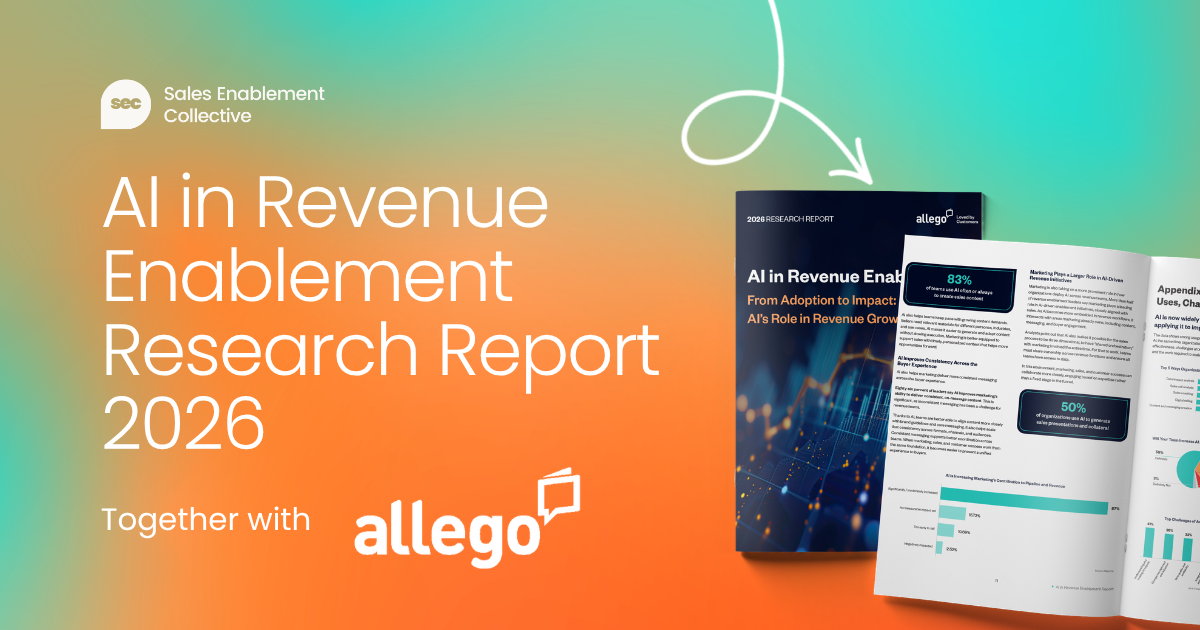
It's showing up in the number that counts
86% report an increase in marketing's contribution to pipeline. 36% call it a significant increase, and 51% call it moderate.
Better, more consistent content is correlating with better outcomes. That's the connection enablement has always argued for, now with data behind it.
Adoption comes with oversight
None of this is happening without controls. 63% of organizations require human review of AI content, and 49% enforce brand guidelines.
This is where enablement adds obvious value. Owning the review step and the brand standards is how you let teams move fast on AI content while keeping quality and compliance intact.
See the full picture
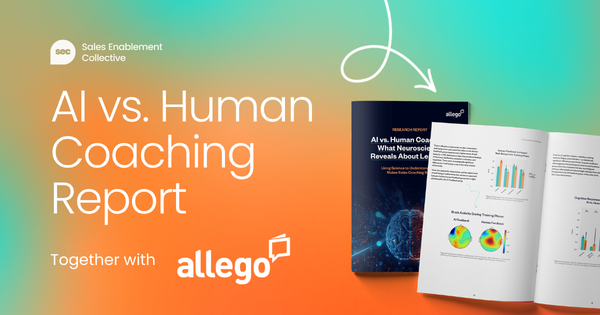
The infographic breaks down all of this in one view: who owns AI, what it creates, how often teams use it, and where it's moving the pipeline number. The research carries a margin of error of +/-5% at the 95% confidence level.
View the full infographic here and see where your team lines up against the data.
Sponsored by:



Sales enablement insider
Thank you for subscribing
Level up your sales enablement career & network with sales enablement experts.
An email has been successfully sent to confirm your subscription.
 Follow us on LinkedIn
![Half of the content marketing made with AI is sales collateral [Infographic]](https://storage.ghost.io/c/af/0b/af0be61a-605a-42ee-a863-ad9ed41cd9ed/content/images/size/w600/2026/08/SEC_Website_Article_Images_Doodles--6-.png)


.svg)

Start the conversation
Become a member of Sales Enablement Collective to start commenting.
Sign up now