















There is a common misconception that you cannot reinvent yourself as you progress in your career. People often feel boxed into their personal or professional identities. I have found the opposite to be true.
You can reinvent yourself whenever you want without paying negative consequences.
I have had a great time doing this throughout my life. I tried my hand at acting and had a lot of fun, even though I quickly realized my six-foot-six frame made me stand out a bit too much in a cast. I moved into marketing and advertising, transitioned into tech sales, and now I am running a startup.
Taking chances and embracing change usually works out just fine.
During my time as a Chief Revenue Officer and Senior Vice President of Global Revenue, I held a somewhat passive view of the enablement function. I viewed enablement as something that helped influence decisions, rather than a function that actively drove the ultimate outcome.
 Rebecca Stewart
Looking back, I see a massive disconnect in how I operated. I would ask my enablement leaders how training was going. They would tell me people were happy and energized. I would give a thumbs up, check the box, and move on to the next decision. I accepted subjective feedback instead of demanding objective data.
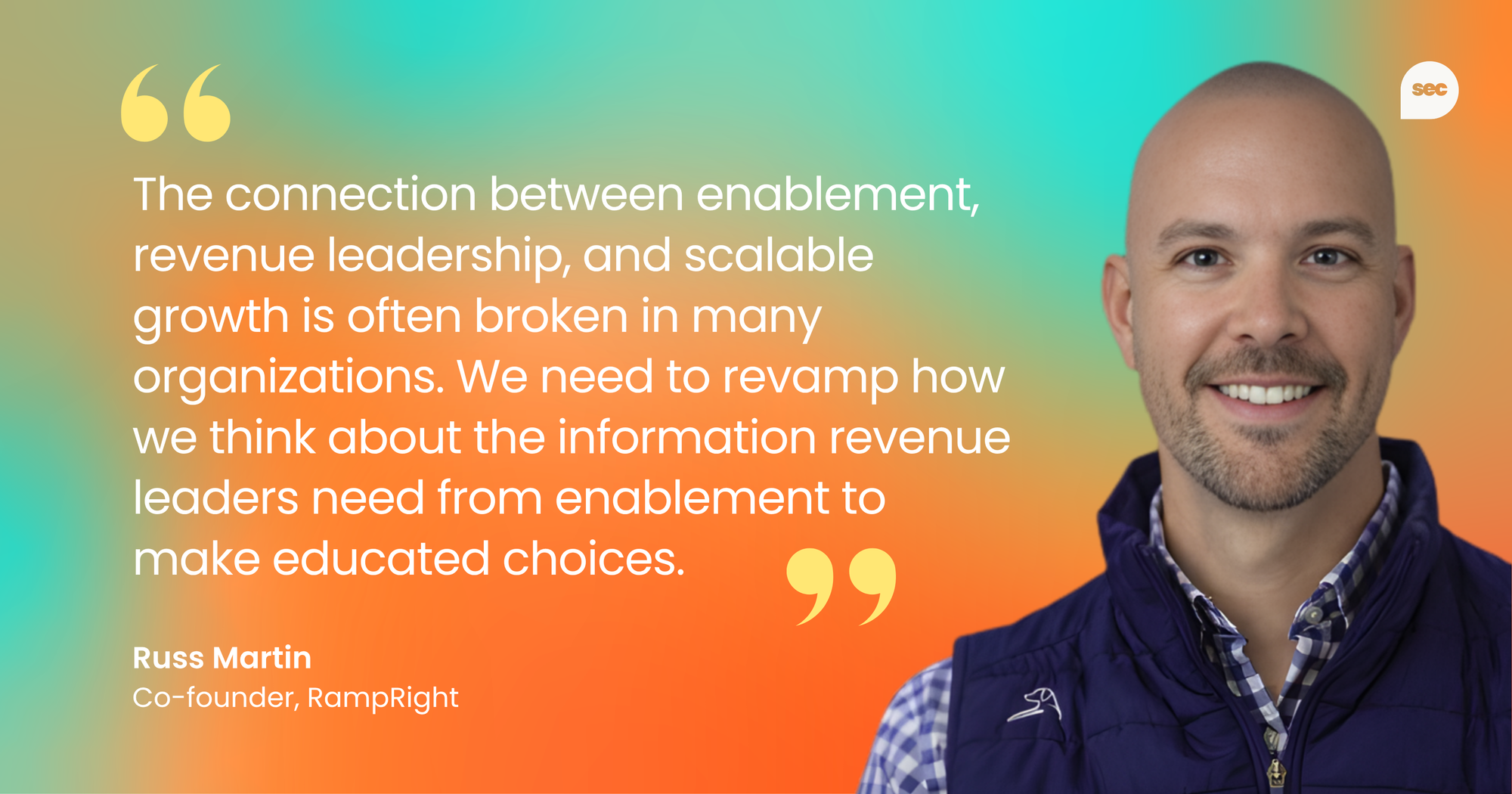
The connection between enablement, revenue leadership, and scalable growth is often broken in many organizations. We need to revamp how we think about the information revenue leaders need from enablement to make educated choices.
The disconnect between revenue goals and enablement metrics
The most critical decision a revenue leader makes is building the forecast.
We project how much we are going to grow and how much we will sell. We then have to determine if the individuals and products on our team are capable of hitting that number.
Building a forecast requires massive assumptions. We assume a new hire who survives an exhaustive interview process will easily write a million dollars in quota over the next eight months. We expect a product team to present a new release for six hours, and we assume the sales team will absorb all of it perfectly. We watch everyone's eyes glaze over in the room. We see them nod because they are desperate to leave the meeting.
Moving beyond best practices
It takes two sides to fix this disconnect. Revenue leaders are often guilty of thinking short-term and focusing solely on the current forecast. Enablement leaders sometimes fall into the trap of accepting "good enough" based on industry norms.
Many teams execute exactly what consultants recommend or what competitor companies do. Very few people take ownership and declare that standard best practices are insufficient for their specific goals. You can always take your programs further.
I have worked with wonderful enablement leaders throughout my career who I genuinely underutilized. If we had connected our heads together, we could have pushed the boundaries well beyond standard procedures.
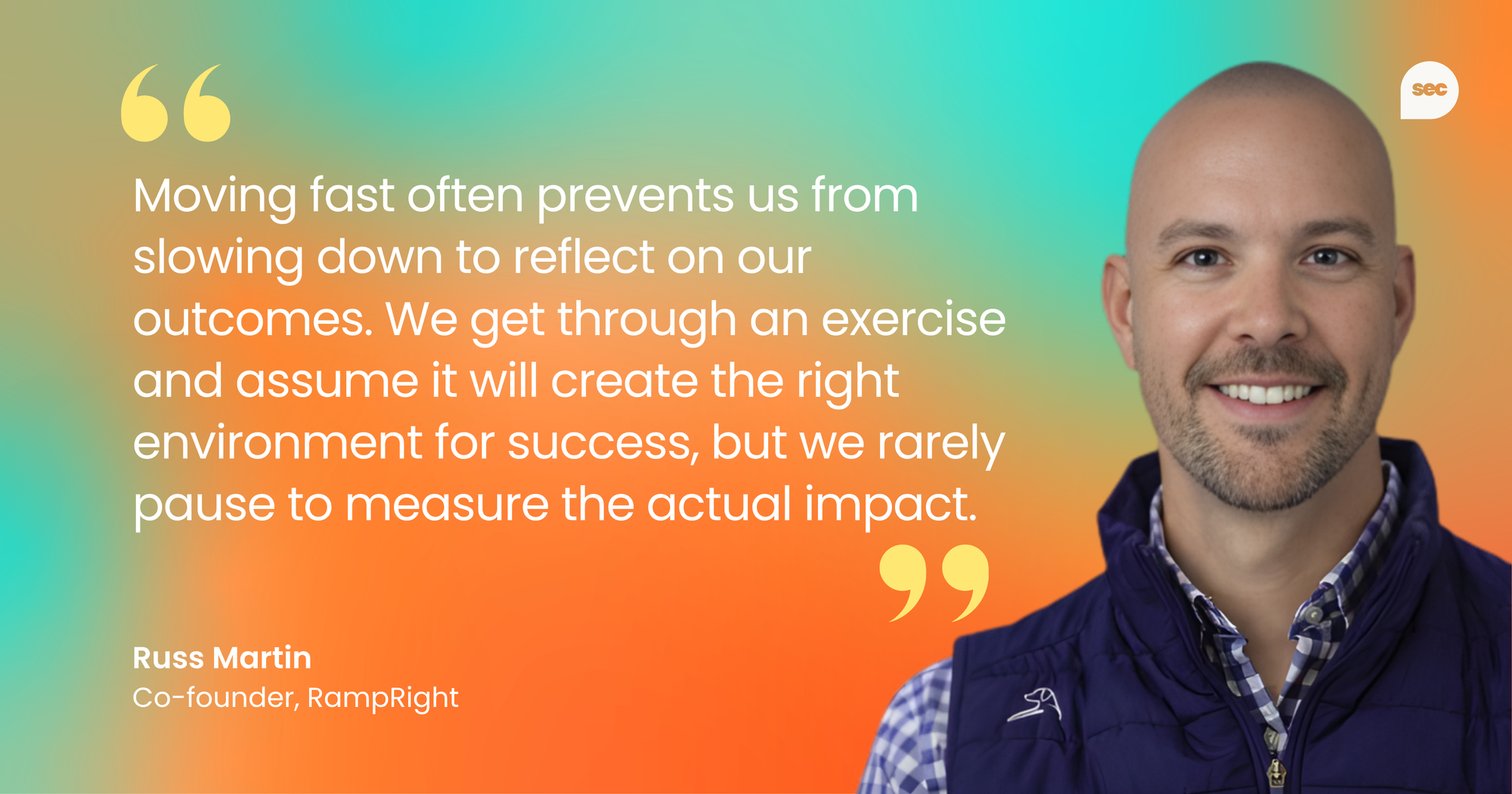
Moving fast often prevents us from slowing down to reflect on our outcomes. We get through an exercise and assume it will create the right environment for success, but we rarely pause to measure the actual impact.
Aligning cross-functional key performance indicators
To drive real impact, key performance indicators must align across multiple departments. I learned this lesson during my time in marketing and advertising.
There were many times my marketing goals had absolutely nothing to do with my revenue goals. I could generate a billion impressions and run a numerically flawless campaign, while the company experienced zero percent growth.
 Allego
Enablement goals must tie directly to revenue goals so everyone pushes in the same direction. When you sit at a roundtable with marketing, enablement, and revenue leaders, every metric needs to intertwine. You cannot let siloed KPIs live on their own.
You need to understand how one department's metrics impact your team.
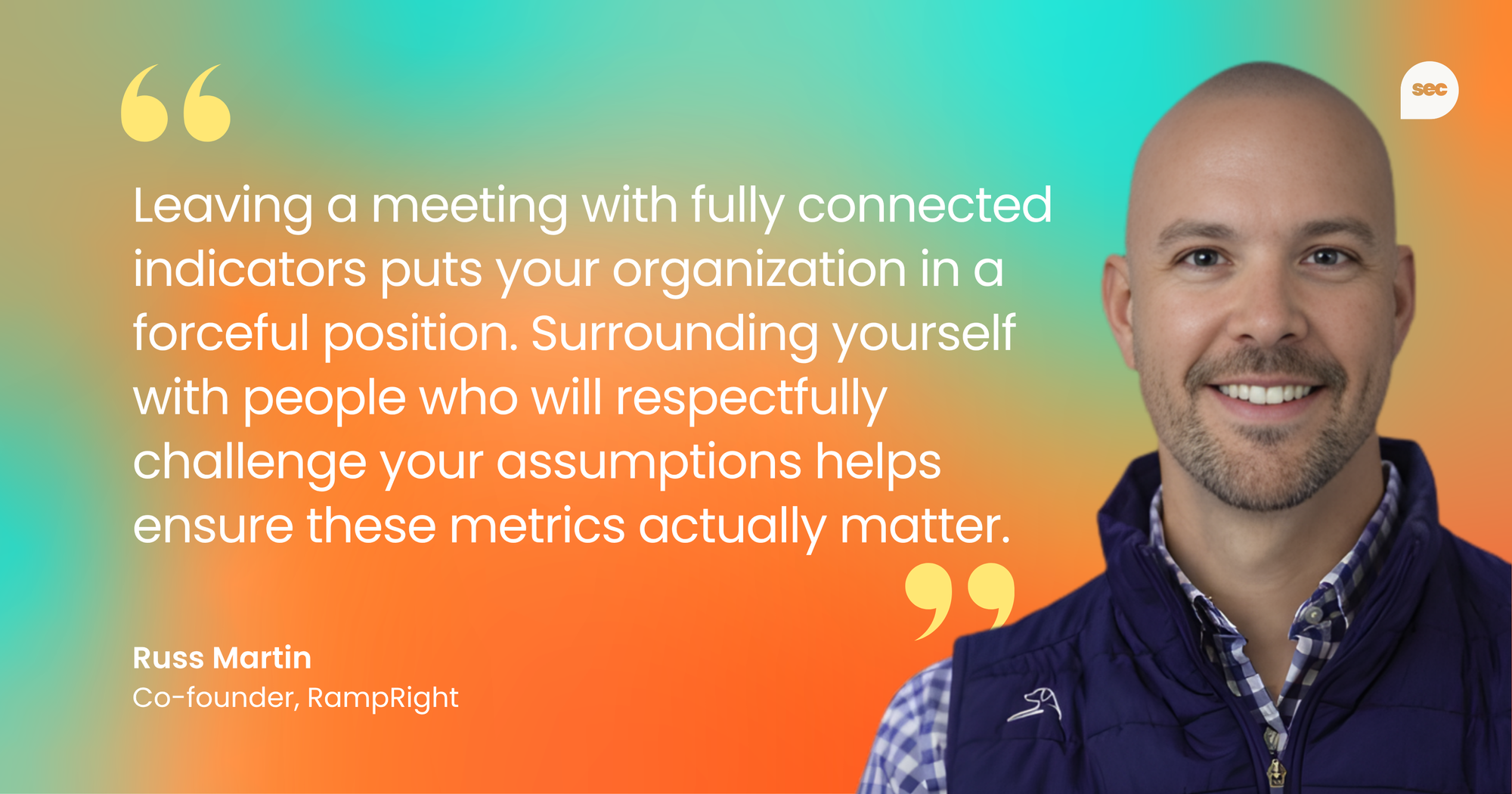
Leaving a meeting with fully connected indicators puts your organization in a forceful position. Surrounding yourself with people who will respectfully challenge your assumptions helps ensure these metrics actually matter.
Rethinking the ramp period
We spend hundreds of thousands of dollars hiring teams and millions developing products.
We then measure the success of our training programs using entirely subjective barometers. We rely on completion rates to tell us if someone is ready to do their job.
Access to content does not equal understanding.
Human resources leaders often share horror stories of employees pressing play on a training module, going to lunch, and receiving the same certificate as someone who watched the entire program.
We need to know if participants understand their responsibilities at their core. We must determine if they know how to apply company content to their specific roles. We have to measure their confidence levels and identify any risks associated with their knowledge gaps.
Managing role transitions and product changes
Ramp periods apply to much more than just new hire onboarding.
Any time there is a change in role or responsibility, you introduce a learning curve that requires structured support.
Organizations frequently promote top-performing individual contributors into management roles. We assume they will be wonderful managers simply because they were great sellers. Selling individually and managing a team of sellers require completely different skill sets. We hand them a new job description and expect them to figure it out on their own.
The same principle applies to product releases and messaging shifts. Product marketing uses advanced tools to determine exactly what the market wants to hear. We ship those new narratives out to the sales team and expect immediate behavior change.
The danger of lagging indicators
Relying on lagging indicators during a ramp period creates massive risk for your revenue forecast.
I used to give new hires a three-month ramp window that operated like a free-for-all. I knew they were completing onboarding tasks, but I had no idea where their proficiency stood between day ten and day ninety.
They would finish their ramp period, and I would realize two months later that they had serious knowledge deficiencies. I would put them on a performance improvement plan. Two months after that, they would leave the company. I would lose eight months of time because I failed to recognize the problem early.
Revenue leaders often want to let the numbers speak for themselves. We wait six months to see how the pipeline looks or if a rep closes their first deal. This approach is essentially rolling the dice and hoping for a good outcome.
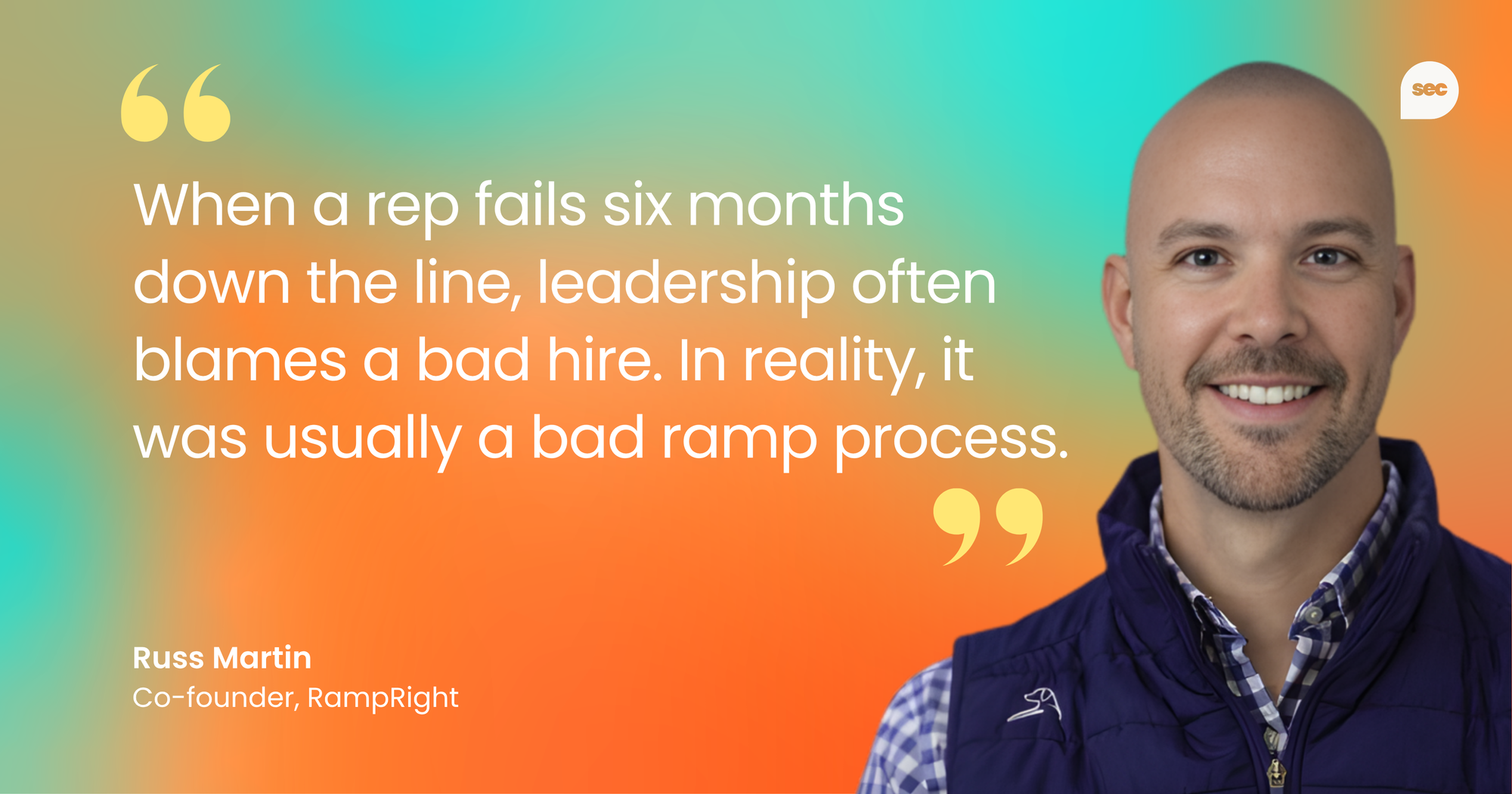
One gap in foundational knowledge can snowball and completely overwhelm a participant. When a rep fails six months down the line, leadership often blames a bad hire. In reality, it was usually a bad ramp process.
Building a culture of objective proficiency
Technology today lets us identify foundational knowledge gaps within days.
We can generate leading indicators that tell us exactly what those gaps will mean for future revenue. We no longer have an excuse to wait six months for pipeline data to materialize.
If you identify a struggling participant early, your management team can jump in and provide targeted support. That individual might end up exactly where you need them to be.
This approach is never meant to be a trap for employees. It exists to provide immediate support and get people back on track before minor issues turn into massive failures. Doing this well uncovers incredible opportunities to accelerate growth and build a highly capable team.
Empowering managers and participants
Creating a clear picture of proficiency requires complete transparency for everyone involved. The participant must fully understand what the journey ahead looks like. They need multiple opportunities to provide feedback on their confidence levels and reflect on their progress.
We have to move beyond quizzes that test group knowledge or allow reps to memorize answers after a failed attempt. We need to take siloed data points and weave them together to paint a comprehensive picture of a rep's journey.
This data must live at the manager's fingertips.
Real-time dashboards provide immediate visibility into how individuals are performing. Managers can see exactly where the risk lies and where the opportunities exist. Giving managers this bandwidth prevents them from scrambling at the end of the quarter to find answers.
Changing the conversation with leadership
The days of using a finger in the air to catch the wind of success are behind us. The conversations between revenue leaders and enablement teams have to evolve.
When a revenue leader asks how a new hiring class is doing, the discussion must center on objective data. You need to sit down and review exactly how many people in a class of fifty are demonstrating the proficiency to do the job. You have to identify who is falling behind.
Consider how this impacts a forecast built on half a million dollars in quota attainment per rep. We need to verify that reps understand the ideal customer profile, the core product, and the value propositions. We must ensure they know how to utilize the tech stack to compete in the market.
This data-driven approach represents an evolution of traditional satisfaction scores. We are moving beyond asking if everyone is excited to be here.
We are focusing on whether they have the foundational knowledge to execute their roles effectively. Tying objective proficiency metrics directly to revenue outcomes ensures your entire organization rows in the same direction.
This article has been adapted from Russ Martin's appearance on the Enablement Optimization Podcast. You can also listen to it on Apple Podcasts and Spotify.


Sales enablement insider
Thank you for subscribing
Level up your product marketing career & network with product marketing experts.
An email has been successfully sent to confirm your subscription.
 Follow us on LinkedIn



.svg)

Start the conversation
Become a member of Product Marketing Alliance to start commenting.
Sign up now