






New York is currently showing its Spring/Summer 2027 collections, which makes September a convenient time to think about trends in another industry. The sales trends emerging in late 2026 are less visually obvious, but several changes in buyer behavior and go-to-market execution are becoming difficult to ignore.
New York Fashion Week itself is presenting roughly 70 runway shows and presentations this season; sales teams are conducting their own version of the same exercise, deciding which practices should carry into next year and which ones have reached the end of their useful life.
Three developments stand out to me: The phone is becoming useful again precisely because so much communication has moved elsewhere. Personalization is moving beyond inserting account variables into outbound messages and toward building an account-specific business case. At the same time, large events are becoming harder to justify automatically, particularly in markets such as New York where competition for the same audience has become extreme.
None of these trends represents an entirely new sales technique. What is changing is the surrounding economics.
1. The phone is back, but the old cold-calling model is not
For several years, sales technology seemed to be moving steadily away from the telephone.
Email sequencing became easier, LinkedIn became central to B2B prospecting, and AI made it possible to research and contact far more accounts with considerably less manual work. Call screening, spam detection, voicemail transcription and automated reception have also made it harder to reach people indiscriminately. Yet the phone has become unexpectedly useful again.
I have closed 3 deals recently where the decisive step was simply dialing a number. The call did not replace research, email or the rest of the sales process, but it created a direct conversation at the moment when another sequence of messages probably would not have changed the outcome.
There is some evidence that this is a broader shift. Cognism's 2026 cold-calling analysis puts the industry success rate at 2.7%, up from 2.3% the year before.
More interestingly, its larger outbound dataset, based on more than 450,000 calls, found a 13.3% answer rate for SDR cold calls using verified data, compared with 14.4% for account executives calling warm contacts.
In Cognism's own outbound operation, phone activity remained the largest contributor to meetings. The numbers come from a sales-data vendor and its own teams, so they should not be treated as a universal benchmark, but the direction is relevant: better targeting appears to be making the call more useful rather than eliminating it.
The difference is precision. A salesperson with accurate contact information, a reason for calling and some understanding of the account is operating very differently from a team working through a database by volume. AI can help with the research and prioritization around the call, while the conversation itself remains unusually efficient at establishing whether there is enough interest to continue.
A phone call also performs another function that is discussed less often: it qualifies the relationship in both directions. Nobody particularly enjoys receiving an unexpected business call, and I would not interpret someone's willingness to answer as an indication that they will buy. However, the first 15 or 30 seconds can reveal a surprising amount about how someone communicates. Are they direct? Curious? Respectful when declining? Able to explain what they need? For partnerships and complex sales, where the parties may work together for months or years, that information has value.
The 2027 version of cold calling therefore looks less like a return to the call center and more like a selective escalation channel. Research first, call the right person, have a reason for calling, and use the conversation to qualify both the commercial opportunity and the working relationship.
 James Shaw
2. Hyper-personalization is moving from the message to the business case
Personalization in outbound used to mean changing a few variables.
A salesperson could insert the prospect's name, company, industry and perhaps one relevant observation into an otherwise standardized sequence. That is rapidly becoming the minimum standard rather than meaningful personalization.
McKinsey's 2026 Global B2B Pulse, based on nearly 4,000 decision-makers across 13 countries, found that more than 90% of B2B organizations already personalize content across channels. The more significant gap is between basic personalization and genuine one-to-one execution: companies gaining market share were 4 times more likely to use true one-to-one personalization. McKinsey specifically identifies dynamic landing pages, contextual offers, tailored messaging and account-specific customer experiences as areas where that distinction is emerging.
AI changes what is economically possible here. An account-specific message can now extend into an account-specific landing page, presentation, keynote section, event invitation, ROI model or business case. A seller can use ChatGPT, Claude, coding tools or a combination of them to research the company, understand its likely priorities and create an experience that reflects the account rather than merely acknowledging its name.
That raises the standard for cold outreach. If I am approaching an important account in 2027, simply changing a few variables in an email is increasingly difficult to describe as personalization. The business case itself should explain why this particular company should care, what the economic opportunity might look like in its environment, and what a plausible path forward would be.
McKinsey's more recent work on AI-enabled sales supports the same direction. Its 2026 research found that B2B growth leaders are embedding AI into core commercial workflows, with 59% identifying seller efficiency and 53% identifying better customer experience as primary benefits. The strongest implementations are using AI for account intelligence, next-best opportunities and individualized engagement rather than treating content generation as the objective by itself.
There is an important constraint. Hyper-personalization cannot become an invitation for every seller to spend 3 hours building every prospect a bespoke website. The scalable model will still require templates, reusable components and clear rules about which accounts justify deeper investment. AI makes one-to-one execution cheaper; it does not make sales time unlimited.
The practical change is that personalization is moving further down the stack. In 2027, the differentiator will increasingly be whether the company has personalized the commercial argument, rather than whether the SDR remembered to personalize the opening sentence.
3. Large events are losing their automatic advantage
Events require more qualification because the available data does not support a simple conclusion that events are no longer effective.
 Sales Enablement Collective

In fact, several industry studies continue to report substantial pipeline influence from in-person events. The change is happening inside the category: marketers are becoming more selective about the type and scale of events they fund.
Forrester's 2025 State of B2B Events research provides a useful signal.
Two-thirds of event teams reported flat or declining budgets, while 59% planned to increase the number of smaller hosted events. The share of organizations planning more large hosted events fell by 12% year over year. Overall event satisfaction also declined by 8%.
That shift makes sense when you look at a market such as New York. The 2026 New York Tech Week included more than 1,500 events and approximately 50,000 participants. The official calendar stretched across everything from AI and infrastructure to finance, consumer technology, founder dinners, workshops and parties. At that density, the problem for an event marketer is no longer simply getting someone interested in attending an event. It is competing with dozens of credible alternatives for the same 2-hour period.
I saw the matching problem directly during New York Tech Week. One of the things that worked surprisingly well was connecting professional service providers with consumer-facing startups in an organic way. The fit was relatively easy to recognize: a startup could need a legal, financial, recruiting or other professional service regardless of the exact structure of its go-to-market organization.
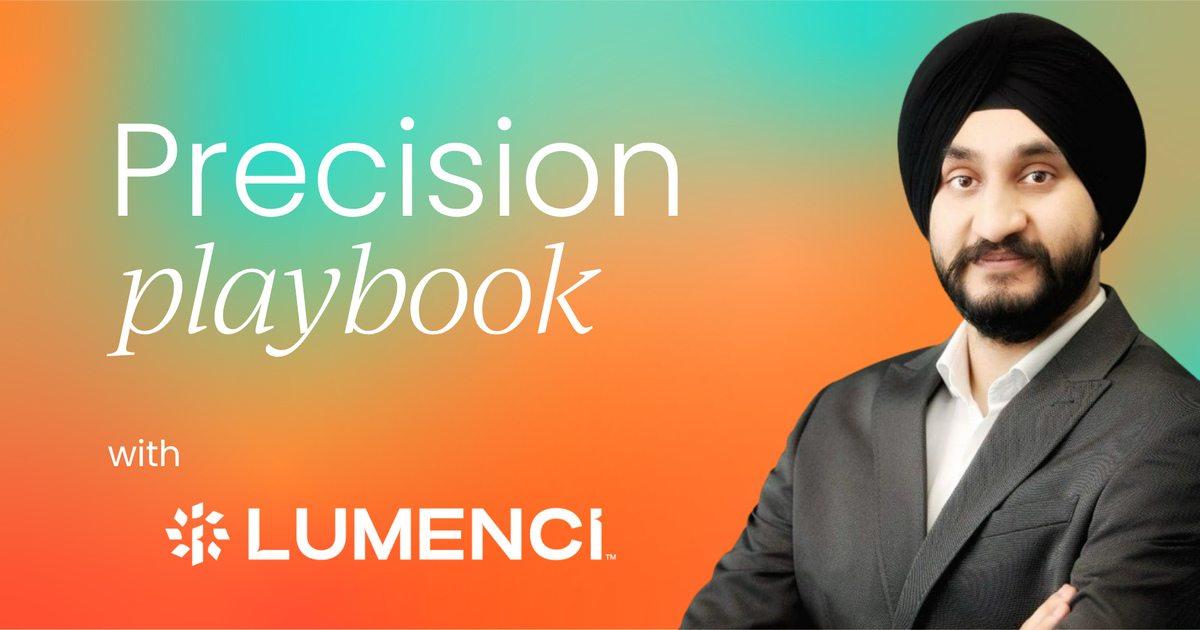
 Saman Deep Singh
The same exercise becomes much more complicated in B2B. A room can contain impressive companies and still produce very little commercial value if the functions, seniority, buying authority, use cases or timing are wrong. Building a useful audience requires thinking through the entire composition of the room rather than maximizing attendance. A cybersecurity vendor, a marketplace consultancy and an infrastructure company may all sell to enterprises, but that does not mean the same 300 attendees create equal value for each of them.
This is also why measuring event ROI too quickly can be misleading. I would not claim that events seldom generate a return within 6 months because the available evidence does not support that statement. What the research does support is that B2B event attribution becomes difficult when sales cycles are long.
Cvent's research notes that attribution is particularly complicated because B2B purchases involve multiple touchpoints and longer sales cycles, while Bizzabo reports that 40% of event organizers in 2026 still struggle to prove ROI.
Events can still be valuable for those longer cycles. Research commissioned by Splash found that 72% of marketers said deals closed faster when prospects attended their events. There is also substantial evidence that face-to-face interaction continues to strengthen trust, which is relevant for enterprise sales, partnerships and existing customer relationships.
The implication for 2027 is therefore more specific than “events are declining.” I expect the generic large networking event to face increasing pressure, while smaller formats with a defined audience and purpose become more attractive. Executive dinners, account-based gatherings, customer sessions, workshops and tightly curated partner events can produce fewer interactions while making each interaction considerably more relevant.
For long sales cycles and strategic partnerships, events still make sense. They simply need to be evaluated over the same time horizon as the relationship they are intended to create.
What these trends have in common
At first glance, phone calls, AI personalization and smaller events have very little in common. In practice, they reflect the same shift in B2B selling: scale by itself is becoming less valuable, while precision is becoming cheaper and therefore more expected.
The phone works when the seller has chosen the right person to call. Hyper-personalization works when the company has identified which accounts justify a tailored business case. Events work when the organizer knows who should be in the room and why those people should meet each other.
That is likely to be one of the defining sales questions of 2027. Most teams already have enough tools to reach more people. The advantage will come from being considerably more
selective about which people are worth reaching, what should be said to them, and when a direct conversation is more valuable than another automated touch.


Sales enablement insider
Thank you for subscribing
Level up your sales enablement career & network with sales enablement experts.
An email has been successfully sent to confirm your subscription.
 Follow us on LinkedIn


.svg)

Start the conversation
Become a member of Sales Enablement Collective to start commenting.
Sign up now