









Here's a scenario that should feel familiar.
A prospect books a discovery call with one of your reps. Before the call, they've fed your public docs, your competitor's pricing page, and a handful of Reddit threads into an LLM. They walk into that conversation with a synthesized technical brief that's sharper than most account executives could produce in a week.
Your rep, meanwhile, prepped with a PDF from last quarter.
That gap? That's the deal. And it's happening on calls every single day.
So the question for sales enablement leaders isn't whether AI-armed buyers are changing the game. They are. The question is what you actually do about it.
The answer isn't more training but a different kind of training, paired with something most enablement programs have never built.
The problem isn't a knowledge gap; it's a retrieval gap
Most sales organizations already have the knowledge their reps need. It lives in battle cards, competitive intel docs, product wikis, and the heads of solutions engineers. The problem is that none of it is accessible when a buyer pushes back with a precise, technical question on a live call.
Working memory under live pressure is brutal. Cognitive load research has long shown that the human brain has strict limits on how much it can actively process when time is tight.
A rep on a video call tracks the conversation, reads body language, takes notes, and tries to sound natural. Asking them to simultaneously retrieve a specific competitive landmine or compliance detail from memory or from a wiki they'd have to search mid-call isn't realistic.
The information exists but can't be accessed when it matters.
This is why reps who pass certification with flying colors revert to monologues and premature pitching the moment a buyer asks something sharp. The training was there. The behavior wasn't. That's a delivery problem, and more training won't solve it.
Draw the line: what to train vs. what to arm
The fix starts with an honest split of your enablement framework into two buckets.
 Sales Enablement Collective
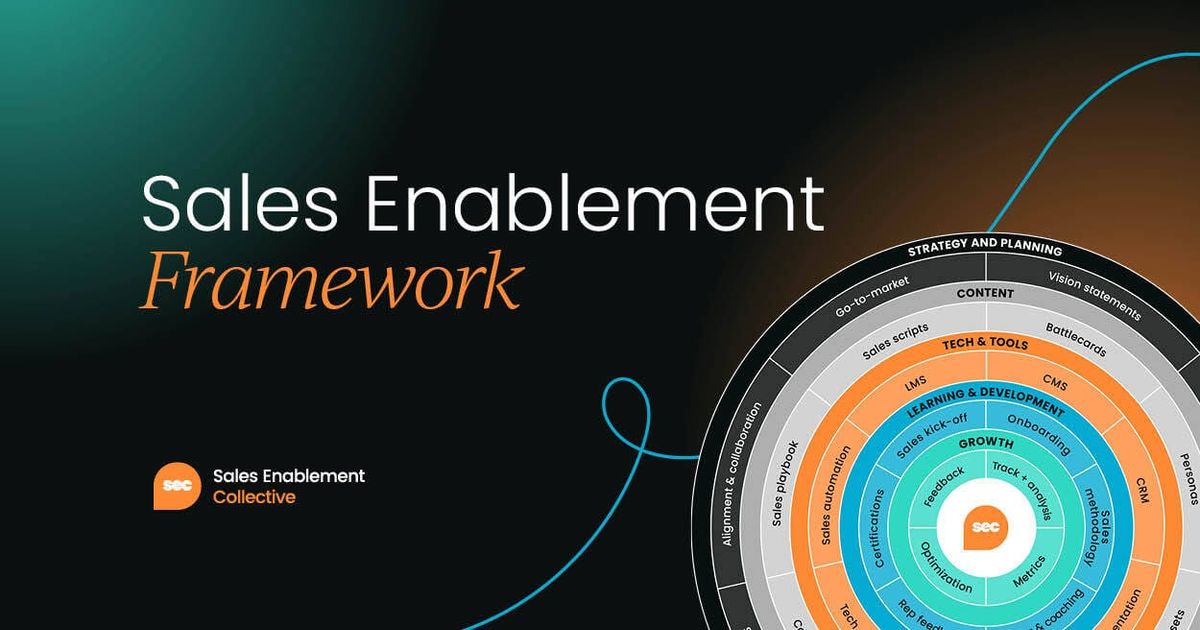
Most programs treat everything the same. They try to train reps on everything, and as a result, reps internalize almost nothing under live pressure.
Here's how to think about the split:
What reps must internalize through training:
- The company narrative: Why the company exists, what problem it solves, and who it solves it for. This builds trust, and trust can't be looked up mid-call. If a rep doesn't believe the story, neither will the buyer.
- The top five discovery questions: The questions that surface pain, urgency, and the economic buyer. These need to be reflexive. A rep who has to search for the right question has already lost the moment.
- Reading the room: Knowing when to slow down, when to push, when to pause, and when to stop talking and listening. This is a human skill. No tool replaces it.
- Objection reflexes: Not the specific technical answers, but the instinct to pause, acknowledge, answer concisely, and pivot back to discovery. The framework is trainable. The content that fills it in doesn't need to live in a rep's head.
 Shun Cheah
What should live in a system, not a rep's head:
- Technical specifications: Integration support, encryption standards, API limits, and compliance certifications. This information changes constantly and is impossible to memorize at the depth an AI-armed buyer expects.
- Competitive landmines: The specific questions that box in a named competitor. These shift every time a competitor ships a release or changes pricing. No rep can keep all of them current.
- Objection-specific answers: The exact, approved response to "how do you handle X" when X is a technical architecture question. These answers come from product and engineering, and they need to be precise.
- Pricing and packaging details: Discount rules, bundle structures, and term options. Reps get these wrong from memory regularly, and the buyer already knows the public version.
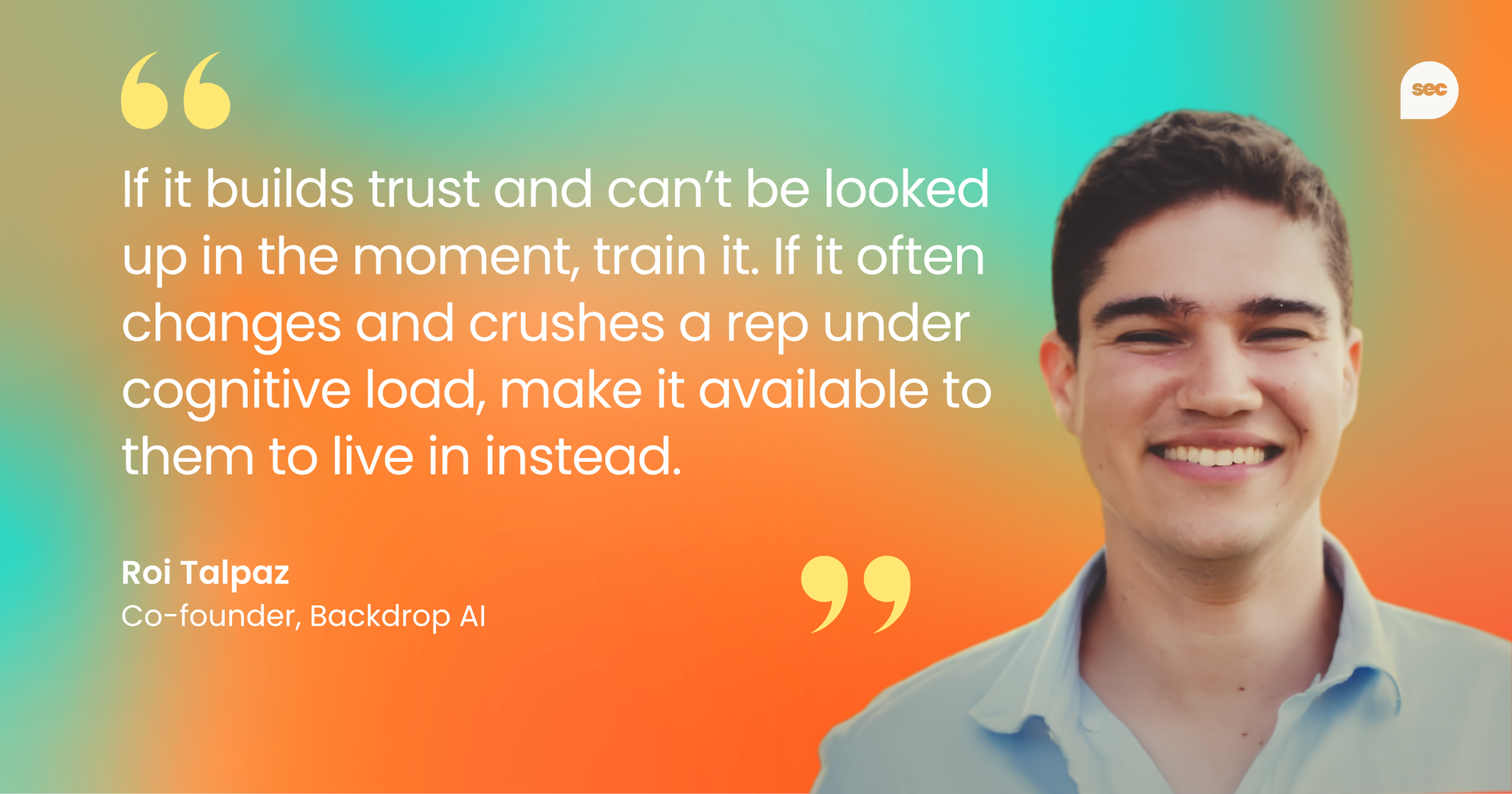
The rule is straightforward. If it builds trust and can't be looked up in the moment, train it. If it often changes and crushes a rep under cognitive load, make it available to them to live in instead.
 Roi Talpaz
Why training alone will never close this gap
You can run the best boot camp in the industry. You can drill reps on objection handling for three days straight. They'll perform beautifully in role play.
Then they get on a real call with a real buyer who asks something they didn't rehearse, and the training evaporates.
Picture a rep who was certified on your compliance posture two months ago. They passed the quiz. They can recite your SOC 2 status from memory in a training room.
Now they're on a call with a director of security at a fintech company who has already run your trust page and your two closest competitors through an LLM. They arrive with a specific question about data residency in EU regions.
The rep freezes. They know the answer is somewhere in the training deck. They can almost see the slide. But the buyer is waiting, the silence is getting awkward, and the rep defaults to "let me get back to you on that."
That moment isn't a training failure. That rep was trained. It's a retrieval failure. The knowledge existed two months ago, but live pressure, time decay, and the buyer's specific framing made it inaccessible. And by the time the rep follows up with an email, the buyer has moved on to the next vendor on their shortlist.
This isn't a one-off scenario. The volume of technical, competitive, and product knowledge required to sell a complex B2B product in 2026 exceeds what any human can hold in working memory under live pressure.
Products get more complex every release. Competitors ship new features every quarter. Reddit threads surface new objections weekly.
The organizations winning right now are the ones that stopped trying to solve a delivery problem with more training. They train the human skills and arm them with technical skills with a system that pushes the right information into the moment. That's the shift from sales training to sales knowledge management.
The three stages of enablement
If you map enablement to the life of a sales call, it breaks into three stages: before, during, and after. Most programs focus on the first and the last.
Before the call.
This is where enablement teams spend most of their energy: account research, briefs, competitive overviews, and pre-assigned content. It's worth the investment. A prepared rep walks in with context and confidence. But prep has limits. It can't anticipate every question, and it's only as useful as the rep's ability to recall it when the conversation takes an unexpected turn.
After the call.
Conversation intelligence gave us recordings, transcripts, and scoring, and with them a much better view into what happens on calls. It's become central to coaching, spotting trends, and keeping pipeline data honest. The tradeoff is timing. By the time you review the call, the moment has passed.
During the call.
This is the stage we've historically left to the rep. When a buyer raises a pain point, names a competitor, or asks a detailed compliance or architecture question, the rep has to find the right response on their own, in real time. Some newer tools are starting to support reps in that moment, but it's still an early category, and most teams haven't tested it yet.
This gap matters more now than it did a few years ago. Buyers increasingly show up having researched with AI, arriving with sharper and more technical questions than before.
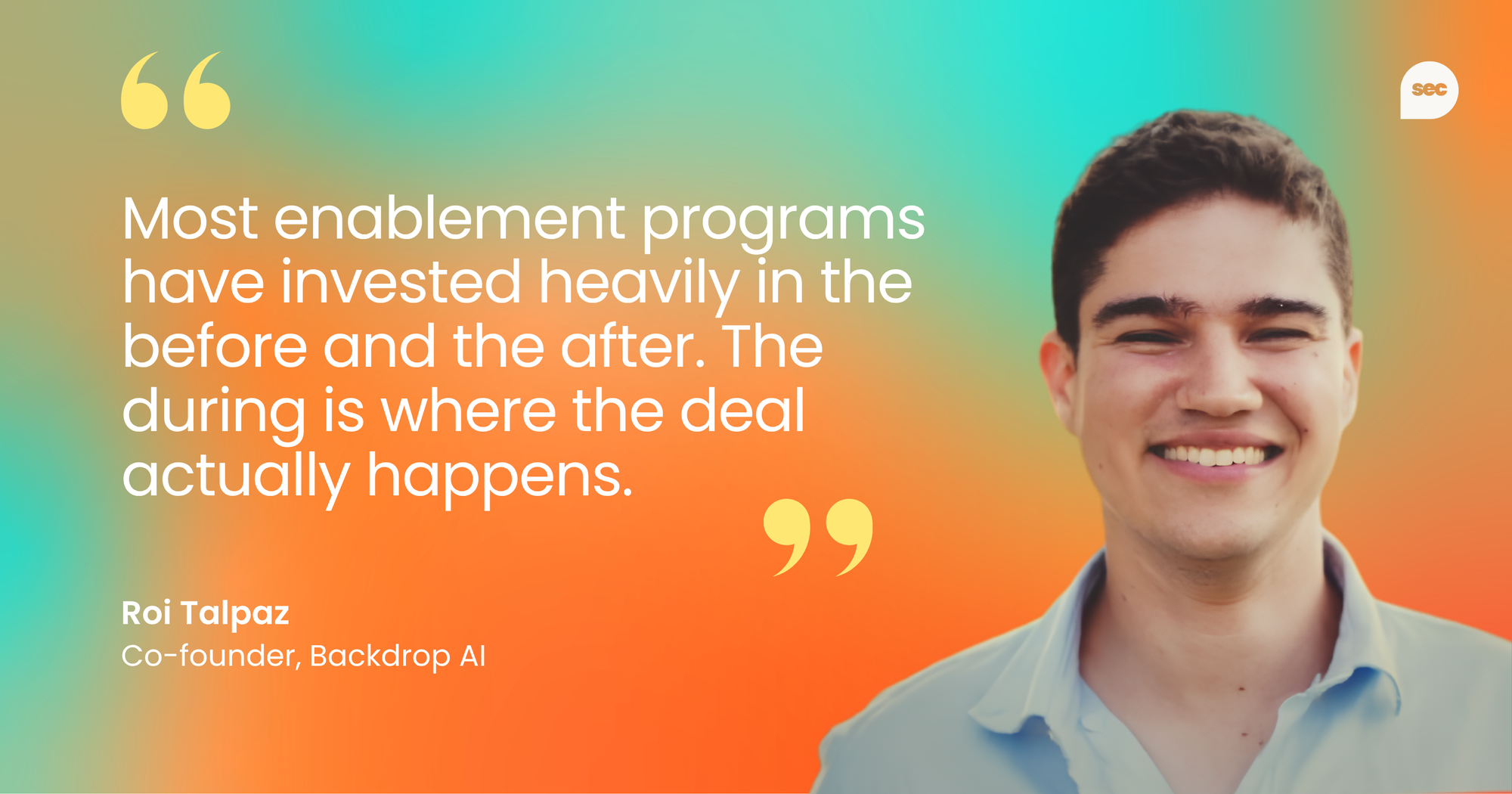
They ask those questions in the live conversation, and that's where reps win or lose credibility. Most enablement programs have invested heavily in the before and the after. The during is where the deal actually happens.
What this means for how you build your program
None of this requires scrapping what you've built. It requires being more deliberate about where each type of knowledge belongs.
Start by auditing what you're currently training.
For each topic, ask whether it's the kind of knowledge that builds trust and needs to be internalized or the kind that changes frequently and would be better surfaced in the moment.
You'll likely find that a significant portion of what you're training reps to memorize falls into the second category.
Then look at your live call stage honestly. What do reps currently have to lean on when a buyer asks something sharp mid-conversation? If the answer is "their memory and whatever they can find in a search bar," that's worth addressing.
Finally, protect the human skills in your training curriculum. The company narrative, discovery instincts, objection reflexes, and the ability to read a room; these are the things that actually build trust with a buyer.
They also can't be automated or surfaced by a system. You have to practice them, reinforce them, and genuinely internalize them. That's where your training hours are best spent.
The bottom line
AI-assisted buyers have raised the bar for what reps need to know, and they've exposed the limits of trying to train everything into a rep's head.
A more realistic approach is to be deliberate about the split: train the human skills that build trust and make fast-changing technical knowledge available when reps need it.
Then take an honest look at the live conversation, where buyers' sharpest questions show up, and ask what your program gives reps to lean on there.
That's the stage most programs underinvest in. In a world where a buyer can walk into a discovery call with a better technical brief than your rep, that stage matters most.


Sales enablement insider
Thank you for subscribing
Level up your sales enablement career & network with sales enablement experts.
An email has been successfully sent to confirm your subscription.
 Follow us on LinkedIn


.svg)

Start the conversation
Become a member of Sales Enablement Collective to start commenting.
Sign up now